Introduction
There are country legends who built careers on polished performances, carefully crafted images, and safe decisions. Then there is Willie Nelson—a man who spent more than six decades proving that freedom is worth more than fame, fortune, or public approval.
To understand Willie Nelson is not merely to hear his unmistakable guitar or recognize his weathered voice. It is to witness an artist who repeatedly chose independence over comfort, authenticity over acceptance, and personal conviction over popularity. Every wrinkle in his face, every braid in his hair, every note from his battered guitar tells the story of a man who refused to become anyone else’s version of success.
His life has never been about rebellion for rebellion’s sake.
It has always been about remaining unmistakably Willie.
“Freedom isn’t simply the right to speak. It’s the courage to live exactly as your soul demands.”
That philosophy became the invisible thread connecting every chapter of his extraordinary journey.
The Nashville Machine Could Never Cage Him
During the early years of his career, Nashville expected artists to fit a predictable mold.
Neat hair.
Pressed suits.
Perfectly polished vocals.
Songs trimmed to commercial expectations.
Willie Nelson looked at that blueprint and quietly walked away.
Executives questioned his appearance.
Radio programmers doubted his unusual vocal phrasing.
Industry insiders wondered whether audiences would ever embrace someone who sounded so conversational rather than theatrical.
Instead of changing himself, Willie changed geography.
He returned to Texas.
There, surrounded by musicians who valued honesty over image, he found room to breathe creatively. The move eventually became one of the most important turning points in country music history.
The “Outlaw Country” movement wasn’t merely a musical genre.
It became a declaration that artists deserved ownership of their identities.
Willie wasn’t asking permission.
He was demonstrating possibility.
The Guitar That Refused Retirement
Most legendary musicians eventually replace worn instruments with pristine custom models.
Not Willie.
His beloved acoustic guitar, Trigger, bears a massive hole worn through years of relentless playing.
To many people, it looks damaged beyond repair.
To Willie Nelson, it looks like freedom.
Every scratch represents another concert.
Every scar represents another story.
Every imperfection represents another mile traveled without compromise.
Trigger has survived thousands of performances because Willie believed objects gain beauty through use rather than preservation.
The guitar became an extension of the man himself.
Weathered.
Scarred.
Entirely authentic.
“Some people replace what grows old. Willie simply kept making it more valuable.”
Defending Personal Liberty Beyond Music
Few artists have been as willing to defend unpopular beliefs.
For decades, Willie Nelson openly advocated for the legalization of marijuana long before it became politically fashionable.
The consequences were real.
Arrests.
Public criticism.
Media ridicule.
Political attacks.
Corporate hesitation.
Many celebrities quietly distance themselves from controversial issues to protect sponsorships or career opportunities.
Willie did the opposite.
He continued speaking because silence would have violated the very freedom he cherished.
Whether people agreed with him or not almost became secondary.
The deeper principle remained consistent.
He believed adults deserved autonomy over their personal choices.
That conviction became inseparable from his public identity.
Years later, public attitudes shifted dramatically.
Many ideas once dismissed as radical entered mainstream conversation.
Willie hadn’t changed.
The world had simply caught up with part of his perspective.
Freedom Isn’t Always Comfortable
Popular mythology often portrays freedom as exciting.
Reality tells another story.
Freedom carries consequences.
Willie Nelson experienced financial hardship, including highly publicized tax troubles that nearly destroyed everything he had built.
For many artists, such a crisis would have marked the end.
Instead, Willie responded the only way he knew.
He kept performing.
Concert after concert.
City after city.
He worked not because someone demanded it but because music itself represented liberation.
The remarkable thing wasn’t merely paying off enormous debts.
It was refusing bitterness.
Rather than becoming cynical, Willie continued smiling onstage with the same gentle warmth audiences had always known.
His resilience transformed financial disaster into another lesson in independence.
Freedom includes accepting responsibility for every decision.
The Hair That Became a Symbol
To outsiders, Willie Nelson’s braided hair appears like simple personal style.
In reality, it evolved into something much larger.
It symbolized resistance against conformity.
He could have adopted fashionable trends countless times.
He could have rebranded himself repeatedly.
Instead, he remained visually recognizable across generations.
Children.
Parents.
Grandparents.
Everyone knew exactly who had walked into the room.
His appearance wasn’t marketing.
It was consistency.
And consistency creates trust.
Friendship Without Boundaries
One of Willie’s greatest strengths has always been his refusal to divide music into artificial categories.
Country.
Rock.
Jazz.
Blues.
Gospel.
Pop.
He collaborated across every imaginable boundary.
Instead of protecting tradition through isolation, he strengthened country music through openness.
Working alongside artists from vastly different backgrounds demonstrated another form of personal freedom.
Curiosity.
Willie never feared learning from someone different.
That openness expanded rather than diminished his identity.
A Voice That Refused Perfection
Many singers chase flawless technique.
Willie Nelson chased emotional truth.
His phrasing often arrives just behind the beat.
Sometimes ahead.
Sometimes almost spoken.
Traditional vocal coaches might criticize those choices.
Fans celebrate them.
Because Willie never sings merely to impress.
He sings to communicate.
Every pause sounds intentional.
Every breath sounds human.
Every crack sounds earned.
That vulnerability cannot be manufactured.
It emerges only when someone stops worrying about perfection.
Why Millions Continue Believing Him
Audiences possess an extraordinary ability to detect authenticity.
They know when artists manufacture personalities.
They know when interviews become performances.
Willie Nelson never seemed interested in acting.
The public encountered nearly the same person onstage, backstage, in interviews, and in everyday life.
That consistency built something advertising budgets cannot purchase.
Trust.
Fans didn’t simply admire his music.
They believed him.
The Price of Living Without Chains
Complete freedom is rarely free.
It demands sacrifice.
Comfort must sometimes yield to conviction.
Popularity occasionally gives way to principle.
Financial security may disappear unexpectedly.
Criticism becomes inevitable.
Willie Nelson accepted those costs long ago.
Perhaps that explains why age has only amplified his cultural influence.
He isn’t remembered merely because he wrote unforgettable songs.
He is remembered because he lived those songs.
His life became the message.
His career became evidence that authenticity survives trends.
“The strongest chains are often invisible. Willie Nelson spent his life teaching people they could still break them.”
An Enduring American Spirit
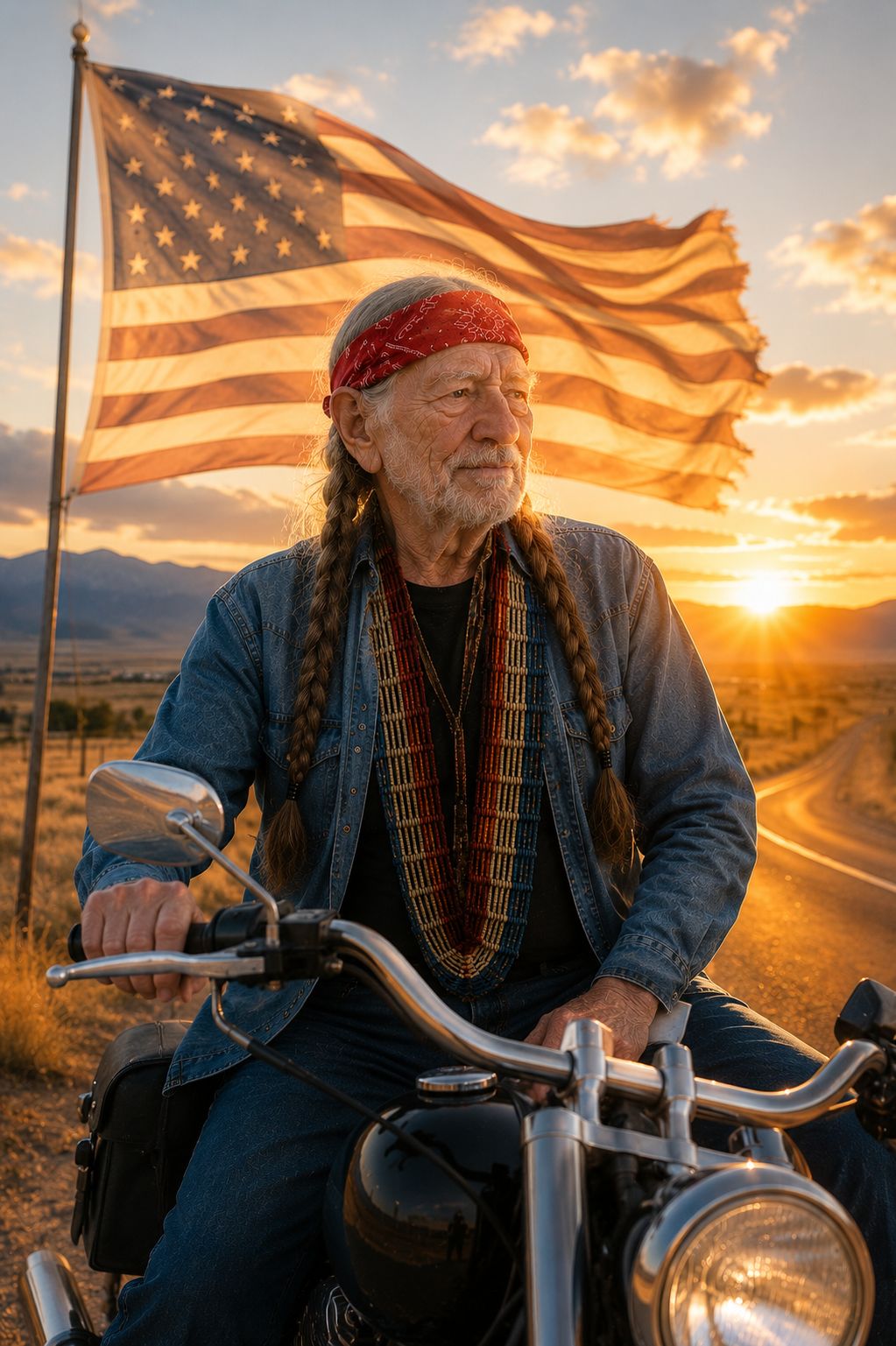
As younger generations discover Willie Nelson, many first notice the braids, the bandana, the famous guitar, or the unmistakable laugh.
Eventually they discover something deeper.
His greatest legacy isn’t marijuana activism.
It isn’t Outlaw Country.
It isn’t even his astonishing catalog of songs.
His greatest legacy is permission.
Permission to think independently.
Permission to age honestly.
Permission to remain imperfect.
Permission to choose authenticity over approval.
In an entertainment industry built upon reinvention, Willie Nelson proved that the most radical act may simply be refusing to become someone else.
That lesson transcends country music.
It belongs to anyone who has ever felt pressured to fit into expectations that never truly reflected who they were.
Long after the final encore fades and Trigger finally falls silent, Willie Nelson’s greatest performance will remain the life he chose to live—a life without unnecessary chains, defended at every cost, guided by unwavering conviction, and illuminated by the enduring belief that personal freedom is not merely an ideal.
It is a way of living.
And Willie Nelson never stopped living it.
Video