Introduction
There are countless songs in Elvis Presley’s legendary catalog that celebrate love, longing, and hope. But hidden beneath the glittering Las Vegas jumpsuits and the thunderous rock-and-roll anthems lies another Elvis—one whose voice carried genuine emotional wreckage. Few performances reveal that vulnerable side more vividly than his unforgettable recording of “Separate Ways,” a ballad that transformed personal heartbreak into one of the rawest country-blues performances of his career.
It wasn’t simply another sad song.
It sounded like a man trying to survive his own broken heart.
When Life Began Imitating the Lyrics
By the early 1970s, Elvis Presley was no longer the carefree young star who had changed music forever. The pressures of fame, relentless touring, health struggles, and the growing distance between himself and Priscilla Presley had begun to cast long shadows over his personal life.
Their marriage, once viewed as a fairy tale, was quietly unraveling.
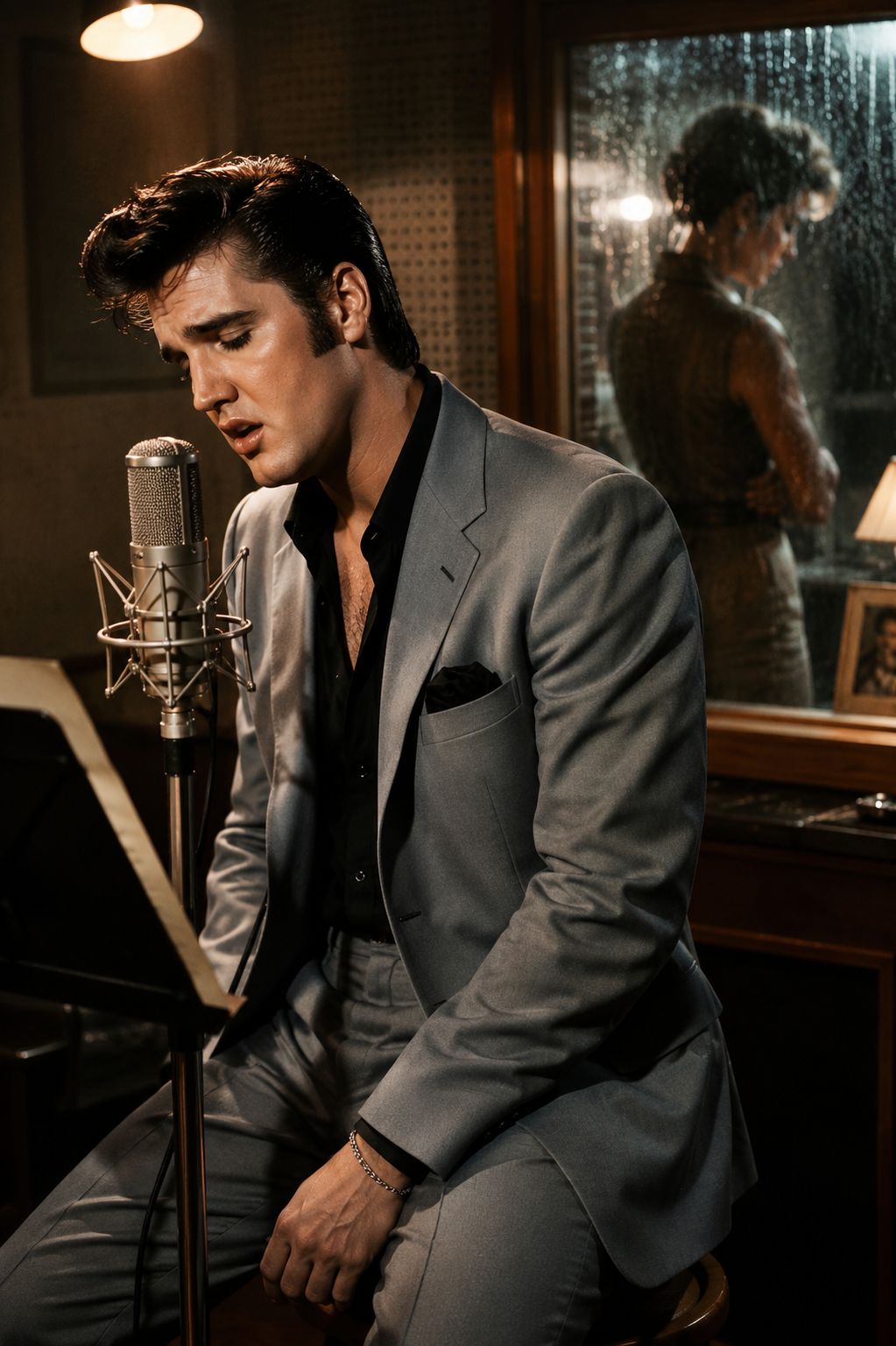
When Elvis entered RCA’s legendary Studio C in Hollywood in March 1972, the emotional wounds were still fresh. The separation from Priscilla had become public knowledge, and divorce papers would soon follow.
Then came “Separate Ways.”
Written by Red West, Richard Mainegra, and Mark P. James, the song tells the heartbreaking story of parents separating while trying to shield their child from the pain.
For Elvis, those weren’t fictional lyrics anymore.
They echoed his own reality.
Every line suddenly carried unbearable weight.
“They’ll never understand why we chose separate ways…”
Those words no longer belonged to anonymous songwriters.
They belonged to Elvis.
Blues Was Never About Genre
Many listeners mistakenly classify Elvis only as the King of Rock and Roll.
Country fans know better.
Blues fans know even better.
Elvis had absorbed blues music long before fame arrived. Growing up in Mississippi, gospel hymns blended naturally with Delta blues and country music. Those influences never disappeared—they simply surfaced differently throughout his career.
“Separate Ways” isn’t technically a traditional blues record.
But emotionally?
It bleeds blues from beginning to end.
The slow tempo.
The restrained instrumentation.
The aching vocal phrasing.
The weary pauses between words.
These are not theatrical devices.
They’re emotional scars.
Instead of overpowering the microphone with his legendary vocal strength, Elvis intentionally pulled back. His delivery became conversational, almost fragile, allowing silence to become part of the music.
That restraint makes every lyric hurt even more.
The Voice That Couldn’t Hide the Truth
One remarkable aspect of Elvis’ greatest recordings is how impossible it became for him to fake emotion.
Earlier in his career, he could play almost any character.
The rebellious teenager.
The romantic dreamer.
The movie hero.
But by 1972, audiences weren’t hearing performances anymore.
They were hearing confession.
Listen closely to “Separate Ways,” and subtle vocal cracks begin to appear—not dramatic breaks, but tiny moments where grief interrupts technique.
Professional singers often strive for flawless perfection.
Elvis did something braver.
He allowed imperfection to tell the story.
That decision transformed an already moving composition into something timeless.
The sadness doesn’t sound rehearsed.
It sounds remembered.
A Father Singing Through His Own Tears
Perhaps the most devastating element of “Separate Ways” isn’t the divorce itself.
It’s the child.
Every parent understands the helplessness of watching children caught between adult decisions.
Elvis certainly did.
Lisa Marie Presley was only a young girl as her parents’ marriage dissolved. While Elvis remained deeply devoted to his daughter, he understood that no explanation could erase the confusion divorce creates for a child.
That awareness seems to hover over every verse.
Rather than expressing bitterness toward Priscilla, the performance focuses almost entirely on loss.
Not lost romance.
Lost family.
Lost normalcy.
Lost innocence.
That’s why the recording continues to resonate decades later.
It’s universal.
Millions of listeners hear their own family stories inside those lyrics.
Country Music Loves Honest Pain
Country music has always embraced emotional honesty over perfection.
From Hank Williams to George Jones, the genre has rewarded artists willing to expose their deepest wounds.
Elvis, despite being labeled primarily as a rock icon, understood this better than most.
His finest country recordings never sounded manufactured.
They sounded lived.
“Separate Ways” stands comfortably alongside country’s greatest divorce songs because it refuses melodrama.
Instead, it offers quiet devastation.
No screaming.
No revenge.
No blame.
Only acceptance.
That emotional maturity elevates the song beyond heartbreak into something almost spiritual.
The Studio Fell Silent
Musicians who worked with Elvis often described how certain recording sessions carried an unmistakable emotional atmosphere.
“Separate Ways” was one of those moments.
The arrangement remained intentionally understated.
Gentle piano.
Soft strings.
Tasteful rhythm section.
Nothing distracts from the voice.
Everything exists to support it.
When Elvis finished singing, there wasn’t much left to add.
The emotion had already filled every available space.
Great recordings aren’t always built from technical brilliance.
Sometimes they’re built from emotional truth.
This was one of those recordings.
Why Fans Continue Discovering It
Unlike “Suspicious Minds” or “Can’t Help Falling in Love,” “Separate Ways” rarely dominates greatest-hits compilations.
Yet many longtime Elvis fans eventually stumble upon it and experience an unexpected reaction.
They wonder:
“How did I miss this?”
Perhaps because it isn’t flashy.
There are no explosive crescendos.
No iconic guitar riffs.
No dramatic stage choreography.
Just one lonely voice telling a painfully familiar story.
In today’s world of polished production and digital perfection, that honesty feels even more powerful.
Listeners crave authenticity.
“Separate Ways” delivers exactly that.
The Hidden Blues Inside Every Country Heart
Country and blues have always shared common roots.
Both genres tell stories of ordinary people facing extraordinary emotional pain.
“Separate Ways” exists precisely where those traditions meet.
The narrative belongs to country music.
The emotional delivery belongs to blues.
The singer belongs to history.
It’s an extraordinary combination that few artists could have achieved.
Elvis wasn’t trying to create a crossover masterpiece.
He was simply singing what hurt.
Ironically, that’s exactly what made the performance unforgettable.
More Than a Divorce Song
Many divorce songs focus on endings.
“Separate Ways” focuses on consequences.
It asks painful questions without pretending to have comforting answers.
How do parents explain separation?
How do children recover?
Can love still exist after marriage ends?
Those questions remain as relevant today as they were in 1972.
That’s why each generation continues finding new meaning in the recording.
Its emotional landscape never ages.
Elvis at His Most Human
History often remembers Elvis Presley as an untouchable icon wrapped in rhinestones and surrounded by screaming fans.
But “Separate Ways” reminds us of something far more important.
Icons cry.
Legends grieve.
Kings lose battles they cannot win.
Behind every record sold, every sold-out concert, and every cultural milestone stood a man experiencing the same heartbreak millions endure.
Perhaps that’s why this recording continues to grow in stature.
Not because it’s the loudest performance.
Not because it’s the most technically ambitious.
But because it’s among the most honest.
In those few unforgettable minutes, Elvis Presley stopped being the King of Rock and Roll.
He became simply a father, a husband facing the collapse of his marriage, and an artist courageous enough to let the world hear his broken heart.
That is the true magic of “Separate Ways.”
It isn’t merely a divorce ballad.
It is a masterclass in emotional storytelling, painted with the colors of country music and shaded by authentic blues. Long after the applause faded and the headlines disappeared, Elvis left behind something even more enduring than another hit record.
He left behind proof that the deepest songs are not sung from the throat.
They are sung from the scars.
Video