Introduction
Some songs are written for a moment.
Others are written for eternity.
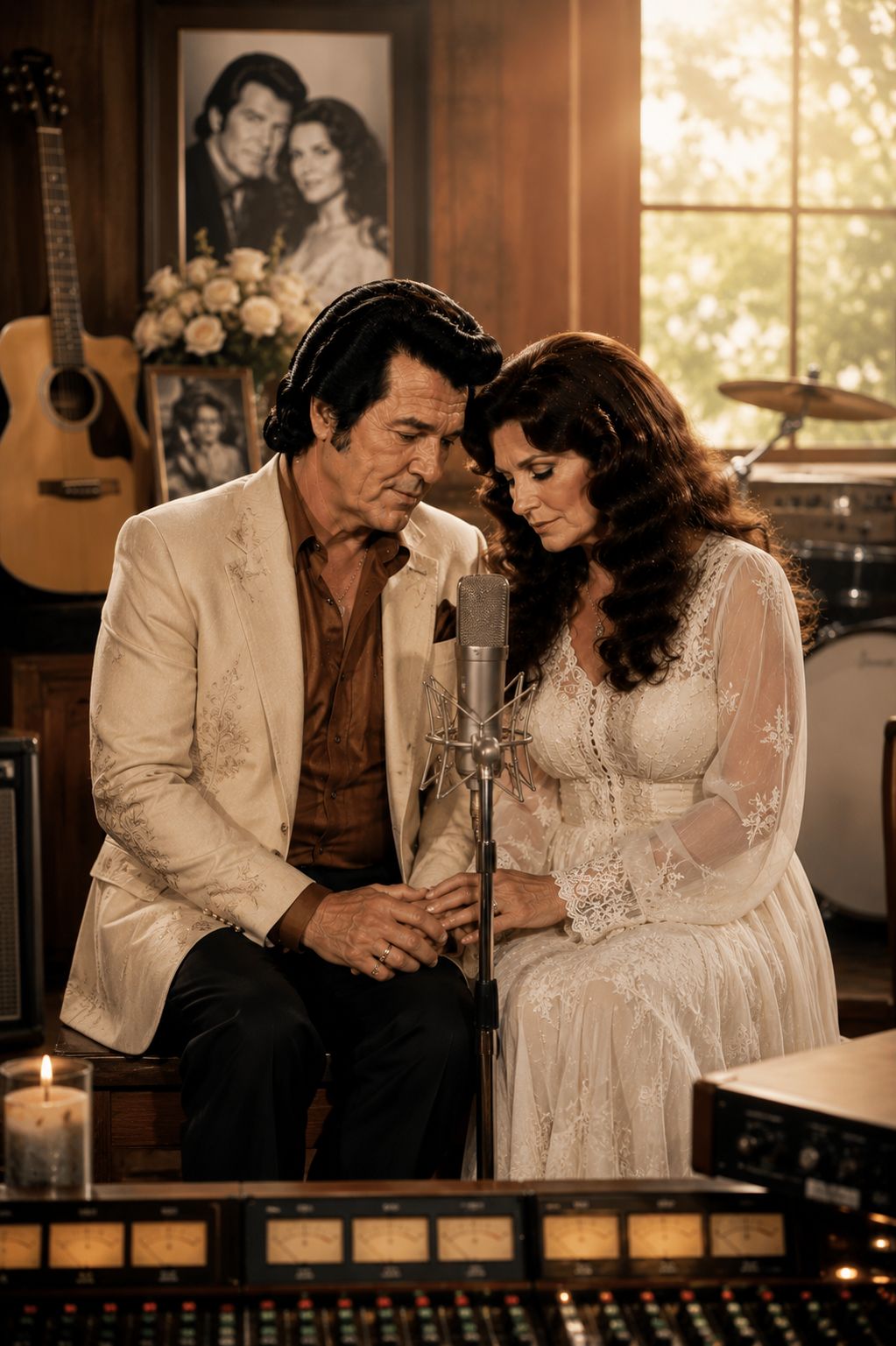
When Conway Twitty and Loretta Lynn first stepped into the studio together, they were simply making country music. They weren’t trying to predict the future. They weren’t attempting to leave hidden messages for generations yet to come. They were telling stories about ordinary people—husands and wives, lovers and fighters, dreamers and survivors.
Yet time has a remarkable way of rewriting music.
Years after Conway Twitty’s passing in 1993 and, decades later, following Loretta Lynn’s farewell in 2022, many of their greatest duets no longer sound like cheerful conversations between two country legends. Instead, they echo like emotional letters left behind—songs that somehow anticipated the silence that would one day replace two of country music’s most beloved voices.
Listening today is an entirely different experience.
What once sounded playful now feels bittersweet.
What once sounded romantic now carries the weight of goodbye.
And perhaps that’s the greatest testament to timeless music.
“Great songs don’t change.
We do.”
Two Voices That Defined an Era
Throughout the 1970s, Conway Twitty and Loretta Lynn became more than duet partners.
They became storytellers whose chemistry couldn’t be manufactured.
Neither voice overpowered the other.
Conway possessed that unmistakable velvet baritone capable of making almost any lyric sound intimate. Loretta answered with a fearless Kentucky honesty that could turn even simple lines into emotional truth.
Together, they sounded less like performers and more like real people sharing pieces of everyday life.
Their records weren’t polished fairy tales.
They argued.
They flirted.
They forgave.
They laughed.
They hurt.
That’s exactly why listeners believed every word.
“After the Fire Is Gone” No Longer Ends With Hope
When “After the Fire Is Gone” first climbed the charts, audiences heard a dramatic tale about two lonely people finding comfort after failed relationships.
It was controversial.
It was bold.
It was unforgettable.
But decades later, the title itself has become haunting.
The fire eventually did go out.
Not because love disappeared.
Because time always wins.
Today, hearing Conway gently trade verses with Loretta creates an emotional contradiction.
You know something they didn’t.
One voice would eventually vanish.
Then the other.
The “fire” becomes more than romance.
It becomes memory itself.
“Sometimes songs don’t grow older.
They grow deeper.”
“Lead Me On” Feels Like A Farewell Conversation
Originally, “Lead Me On” explored emotional dependence between lovers.
Its lyrics reflected vulnerability.
Trust.
Following someone despite uncertainty.
But after both artists left this world, fans began hearing something completely different.
The song now resembles one soul quietly promising another:
“Don’t leave me behind.”
Conway sings.
Loretta answers.
Neither realizes history will separate them for nearly three decades before eternity reunites their legacies in listeners’ hearts.
That perspective transforms every harmony.
Every pause.
Every lingering note.
“Louisiana Woman, Mississippi Man” Has Become Pure Nostalgia
Few country duets possess the joyful energy of “Louisiana Woman, Mississippi Man.”
It explodes with confidence.
Laughter.
Movement.
Youth.
It’s impossible not to smile.
Yet modern audiences often smile through tears.
The excitement inside the recording reminds us of something impossible to recreate.
Two legends.
Alive.
Laughing.
Completely unaware they were creating memories that millions would revisit long after both had gone.
The song isn’t simply entertaining anymore.
It’s a preserved photograph.
Only this photograph sings.
The Magic Hidden Inside Ordinary Conversations
Perhaps the most extraordinary quality of Conway and Loretta’s music lies in its simplicity.
There were no complicated production tricks.
No massive orchestras designed to overwhelm emotion.
Just stories.
Voices.
Truth.
That simplicity allows modern listeners to project new meanings onto familiar songs.
A line once interpreted as playful teasing suddenly sounds like longing.
A joke suddenly resembles gratitude.
An ending suddenly feels unfinished.
Music becomes a conversation across generations.
“As Soon As I Hang Up The Phone” Sounds Like Time Itself
Originally structured around a heartbreaking telephone conversation, this duet already carried emotional tension.
Today, it’s nearly impossible to hear without imagining the final goodbye between two legendary careers.
The pauses feel heavier.
The silence matters more.
Listeners know something the singers never could.
Eventually…
The phone really would stop ringing.
Yet the recording keeps answering.
Every single time someone presses play.
“Records preserve something even time cannot erase:
a living voice.”
Why These Songs Feel Prophetic
Were Conway and Loretta predicting their futures?
Of course not.
The real explanation is far more beautiful.
Human emotions never expire.
Love.
Loss.
Distance.
Hope.
Regret.
The songs always contained these universal truths.
It simply took decades—and heartbreak—for listeners to recognize them fully.
Every generation discovers new meanings inside timeless music because every generation experiences different kinds of loss.
Young listeners hear romance.
Older listeners hear remembrance.
Neither interpretation is wrong.
The Empty Space Between The Harmonies
One unexpected change occurs when revisiting classic duet recordings after both performers are gone.
You begin noticing silence.
The breaths.
The pauses.
The tiny moments between lyrics.
Those spaces now carry almost as much emotional weight as the singing itself.
It’s as though listeners instinctively fill those quiet moments with memories.
Not only of Conway.
Not only of Loretta.
But of parents who played these records.
Grandparents dancing in living rooms.
Road trips.
Family kitchens.
Vinyl spinning late into the evening.
Their music became the soundtrack for millions of ordinary lives.
Which means losing Conway and Loretta also means revisiting pieces of our own history.
Why Younger Audiences Are Discovering Them Again
Streaming has introduced Conway Twitty and Loretta Lynn to listeners who weren’t even born during their chart-topping years.
Many arrive expecting vintage country.
They leave emotionally surprised.
Because authenticity doesn’t age.
Modern production techniques may evolve.
Country trends may shift.
But honest storytelling never becomes outdated.
That’s why reaction videos frequently show younger listeners pausing midway through these recordings.
Not because they’re old.
Because they’re real.
Legacy Isn’t Built On Awards
Yes, Conway collected countless No. 1 hits.
Yes, Loretta changed country music forever.
Those accomplishments matter.
But awards eventually gather dust.
Statistics fade.
Chart positions become trivia.
Songs remain.
Especially songs capable of changing meaning across decades.
That is the rarest achievement an artist can accomplish.
Creating music that refuses to stand still.
Music that continues evolving without changing a single lyric.
The Final Verse Never Ends
Perhaps that’s why these classic tracks feel almost prophetic today.
Not because Conway Twitty or Loretta Lynn foresaw the future.
But because they understood humanity.
Every listener eventually experiences goodbye.
Every family eventually mourns someone.
Every generation discovers that love outlives those who first sang about it.
So when Conway begins a verse…
Loretta still answers.
Not from another stage.
Not from another studio.
But from recordings that continue defeating silence.
Their harmonies remain suspended in time, untouched by mortality.
That may be country music’s greatest miracle.
The singers leave.
The songs stay.
And every time “After the Fire Is Gone,” “Lead Me On,” “Louisiana Woman, Mississippi Man,” or “As Soon As I Hang Up the Phone” begins to play, they cease being historical recordings.
They become living conversations once again.
Perhaps that is why these timeless classics now feel almost prophetic.
Not because they predicted loss.
But because they quietly prepared us for it.
Long before we ever realized we would need them.
Video