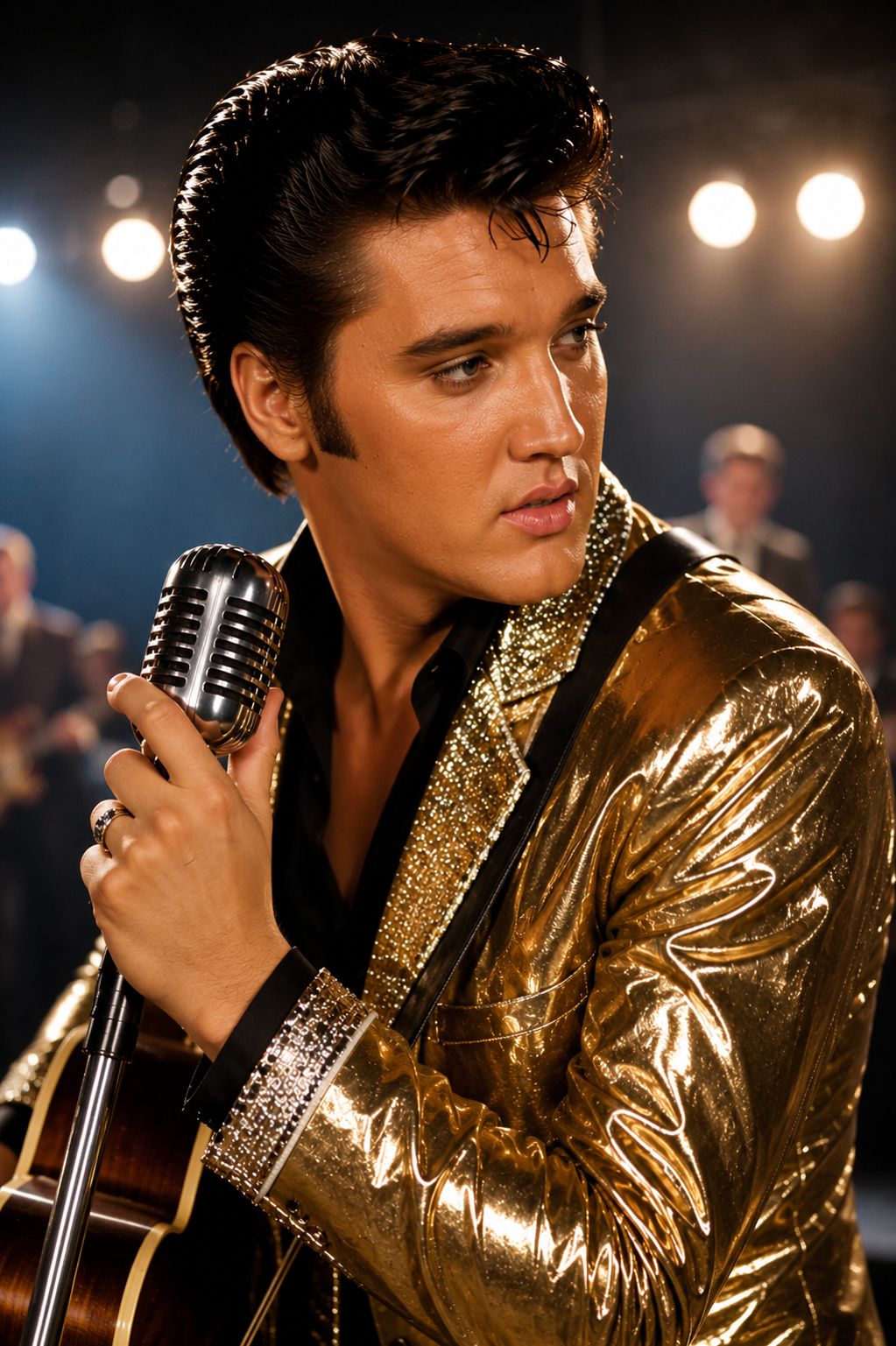
Introduction
There are moments in music history that feel less like career milestones… and more like explosions.
The moment Elvis Presley became the King of Rock ’n’ Roll was one of them.
It did not happen quietly.
It did not happen politely.
And it certainly did not happen without fear, outrage, and controversy.
It happened because one young man from Tupelo walked onto stages across America carrying something the country had never truly seen before: raw emotion mixed with rebellion, gospel soul fused with country pain, and a voice that sounded dangerous to the old world.
By the time America realized what was happening… it was already too late.
Rock ’n’ roll had a king.
The Boy Who Shouldn’t Have Made It
Before the screaming fans and television scandals, Elvis was simply a poor Southern kid trying to survive.
He grew up in a tiny house in Mississippi during the Great Depression. Money was scarce. Opportunity was even scarcer. But music surrounded him everywhere — gospel churches, blues joints, country radio stations, and the aching songs of ordinary people.
That mixture would become the secret weapon that changed music forever.
Unlike polished singers of the era, Elvis sounded human. Vulnerable. Wild. Emotional.
He wasn’t trained to be perfect.
He was trained by pain.
“Elvis didn’t sing songs. He lived inside them.”
When his family moved to Memphis, the city transformed him. Memphis was alive with blues, rhythm & blues, and gospel energy. Elvis absorbed everything like a sponge.
He listened to Black artists that mainstream America ignored. He blended those sounds with Southern country music. And somehow, he created something new.
Something explosive.
The Night Everything Changed
In 1954, Elvis walked into Sun Records — a tiny recording studio owned by Sam Phillips.
Phillips had spent years searching for a white artist who could channel the emotional depth and rhythm of Black music while reaching mainstream audiences. Then Elvis appeared.
At first, nothing magical happened.
The recording sessions felt awkward. Forced. Uncertain.
But late one night, during a break, Elvis started fooling around with a blues song called That’s All Right. He sang it faster, looser, and with a strange swagger nobody expected.
The room froze.
Something electric had just happened.
Phillips immediately told the band to keep playing.
That recording would become the spark that ignited rock ’n’ roll.
Radio listeners went insane trying to figure out who this singer was. Some believed Elvis was Black because of the way he sounded. Others simply could not understand what they were hearing.
But everybody remembered it.
And that was enough.
America Wasn’t Ready for Elvis
By 1956, Elvis Presley was no longer just a singer.
He was becoming a cultural earthquake.
Teenagers worshipped him. Parents feared him. Churches condemned him. Television hosts struggled to control him.
His voice was only part of the story.
It was the movement.
The hips.
The sneer.
The confidence.
The dangerous energy.
America in the 1950s valued control, conformity, and image. Elvis represented the opposite. He looked like rebellion wrapped in charm.
Girls screamed so loudly at concerts that the music could barely be heard.
Boys copied his hair, clothes, and attitude.
Adults panicked.
“Elvis wasn’t just music. He was freedom young people had never tasted before.”
One performance on The Ed Sullivan Show became legendary. Network executives were so uncomfortable with Elvis’s dancing that cameras reportedly filmed him mostly from the waist up.
That only made him more powerful.
Because controversy fuels legends.
The Birth of the King
The title “King of Rock ’n’ Roll” was not handed to Elvis overnight.
It grew out of domination.
Hit after hit stormed the charts:
- Heartbreak Hotel
- Hound Dog
- Don’t Be Cruel
- Love Me Tender
Everywhere Elvis went, hysteria followed.
He shattered sales records. Concert attendance exploded. Merchandise flooded stores. Hollywood called. Television demanded appearances.
No artist before Elvis had created this level of mass obsession.
Not in country music.
Not in pop.
Not anywhere.
And what made it even more powerful was the emotional contradiction inside him.
Elvis looked fearless onstage.
But privately, he remained deeply insecure.
Friends described a man desperate for love and terrified of losing his audience. He carried enormous pressure while the world transformed him into a symbol larger than life.
That emotional tension became part of his magic.
Because fans didn’t just see a superstar.
They saw someone fighting his own loneliness in front of millions.
Why Country Music Helped Create Rock ’n’ Roll
One of the biggest misconceptions about Elvis is that he abandoned country music.
He didn’t.
Country music was embedded in his DNA.
Long before rock exploded, Elvis had absorbed the storytelling heartbreak of Southern country artists. You could hear it in the vulnerability of his voice. Even when the rhythm sounded rebellious, the emotional core often came from country pain.
That’s why Elvis connected across generations and genres.
He was not fully rock.
Not fully country.
Not fully blues.
He was all of them at once.
And that fusion changed music forever.
Without Elvis, countless future stars may never have existed:
- Johnny Cash
- Willie Nelson
- Conway Twitty
- Loretta Lynn
Even artists outside country music studied him obsessively.
Because Elvis proved one truth:
Emotion matters more than perfection.
Fame Came With a Price
The tragedy of Elvis Presley is that becoming the King slowly consumed the man underneath the crown.
The pressure never stopped.
Movies. Tours. Interviews. Fans. Expectations.
America wanted Elvis to remain larger than life forever.
But no human being can survive as a myth forever.
As the years passed, the energy that once made him revolutionary began turning into exhaustion. The loneliness deepened. So did the emotional weight of fame.
Yet even during his struggles, audiences still saw flashes of the magic that first shocked America.
Especially when he sang from pain.
Because pain had always been the true engine behind Elvis Presley.
“The world crowned Elvis a king… but inside, he was still the poor boy chasing acceptance.”
That contradiction is why his story still hurts people decades later.
Why Elvis Still Matters Today
Many artists become popular.
Very few become permanent.
Elvis Presley became permanent because he represented a turning point in culture itself.
Before Elvis, popular music felt controlled.
After Elvis, it felt emotional, dangerous, and alive.
He opened the door for future rebels. He shattered boundaries between musical genres. He forced America to confront changing youth culture whether it wanted to or not.
And perhaps most importantly…
He made people feel something real.
That is why generations continue discovering him.
Not because of nostalgia.
But because authenticity never dies.
When Elvis Presley became the King of Rock ’n’ Roll, it wasn’t simply the rise of a musician.
It was the moment music itself became untamed.