Introduction
There was a time when Nashville had a formula.
Wear the right suit.
Sing the songs the producers handed you.
Smile for the cameras.
Don’t get too political.
Don’t sound too different.
And whatever you do… don’t challenge the machine.
Then came Willie Nelson.
And Nashville never recovered.
He didn’t just break the rules of country music. He walked into the heart of the industry with long hair, worn-out jeans, a beat-up guitar named Trigger, and a voice nobody thought belonged on the radio — and somehow changed American music forever.
The truth is, Willie Nelson was never supposed to become a legend.
That’s exactly why he did.
The Voice Nashville Tried to Reject
In the early years, Willie looked nothing like a country star. He didn’t sound like one either.
His voice was rough. Loose. Almost conversational. While Nashville executives wanted polished perfection, Willie sang like a man telling stories at 2 a.m. over whiskey and cigarette smoke.
Record labels didn’t know what to do with him.
They tried to shape him into something cleaner. More marketable. More “acceptable.”
But every attempt to smooth Willie Nelson out only erased what made him unforgettable.
“They wanted him to fit the system. Willie wanted the system to leave him alone.”
At first, he survived mostly as a songwriter. And what a songwriter he was.
He wrote classics other artists turned into massive hits:
- “Crazy” for Patsy Cline
- “Night Life”
- “Funny How Time Slips Away”
Ironically, Nashville loved Willie’s words long before it loved Willie himself.
But behind the scenes, frustration was building.
Because Willie Nelson didn’t dream of becoming another manufactured star.
He wanted freedom.
The Fire That Changed Everything
By the early 1970s, Willie was exhausted with Nashville.
The suits.
The creative control.
The endless pressure to become someone else.
Then something happened that felt symbolic — his house in Tennessee burned down.
Most people would’ve seen disaster.
Willie saw liberation.
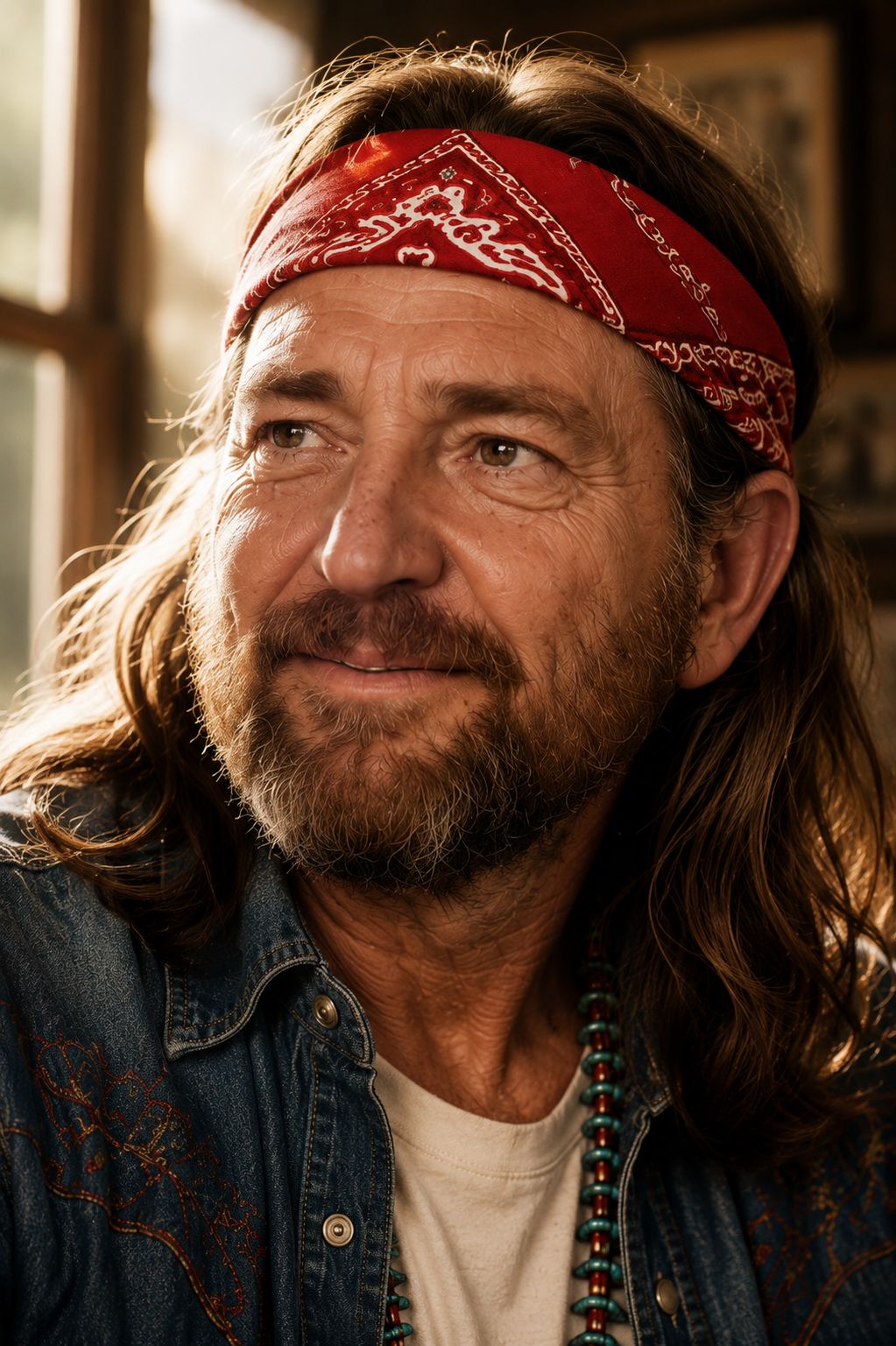
He moved back to Texas. Grew his hair long. Started wearing bandanas and denim instead of polished cowboy outfits. He embraced hippie culture, outlaw energy, and musical experimentation.
And suddenly, country music had a rebel.
Not the fake Hollywood kind.
A real one.
“Willie Nelson didn’t leave Nashville because he failed. He left because success there felt like a prison.”
Texas audiences understood him immediately.
They didn’t care if he looked polished. They cared if the music felt real.
And real was something Willie had in abundance.
The Birth of the Outlaw Movement
Country music changed the moment Willie joined forces with artists like Waylon Jennings.
Together, they created what became known as the “Outlaw Country” movement.
Outlaw Country wasn’t just a sound.
It was rebellion against control.
The artists chose their own songs.
Their own bands.
Their own image.
Their own truth.
For Nashville executives, it was chaos.
For fans, it was freedom.
Albums like Red Headed Stranger shocked the industry. The record was stripped-down, emotional, and deeply unconventional. Executives reportedly thought it sounded unfinished.
Willie released it anyway.
And it became legendary.
That album alone proved something Nashville never understood:
Perfection doesn’t move people. Honesty does.
He Made Vulnerability Cool
What made Willie different wasn’t just rebellion.
It was tenderness.
Even at his wildest, there was always sadness in his music. Reflection. Humanity.
He could sing about heartbreak in a way that felt devastatingly intimate.
Not theatrical.
Not exaggerated.
Just true.
That honesty became his superpower.
Songs like “Blue Eyes Crying in the Rain” didn’t feel performed. They felt lived.
“Willie Nelson never sang at people. He sang beside them.”
Fans saw themselves in him.
The lonely.
The outsiders.
The dreamers who never quite fit in.
And maybe that’s why generations connected to him. Willie didn’t pretend to be larger than life.
He felt painfully human.
The Image That Terrified Nashville
Everything about Willie broke industry expectations.
Long hair.
Braided bandanas.
Sneakers instead of cowboy boots.
Marijuana activism.
Liberal politics in a conservative genre.
Nashville executives probably thought his image would destroy his career.
Instead, it made him iconic.
Because people trusted him.
Even when they disagreed with him, they believed he meant what he said.
That authenticity became priceless in an industry often criticized for being too manufactured.
Willie Nelson became more than a country star.
He became a symbol of artistic freedom.
Trigger: The Guitar That Became Part of History
Every legend needs a companion.
For Willie, it was Trigger.
The battered Martin guitar with the massive hole worn through the body became almost mythical over the decades.
Most artists would replace a damaged guitar worth thousands.
Willie never did.
Because Trigger wasn’t a prop.
It carried scars. Memories. Mileage.
Just like him.
“The hole in Trigger told the same story as the lines on Willie’s face — survival.”
Together, they crossed generations, genres, and eras of American music.
And somehow, Willie remained relevant through all of it.
Rock fans loved him.
Country fans adored him.
Young audiences discovered him again and again.
That almost never happens in music.
The Industry Eventually Surrendered
At some point, Nashville stopped trying to control Willie Nelson.
Because it became impossible.
The rebel they once doubted had become one of the most respected artists alive.
Awards piled up.
Hall of Fame honors arrived.
Collaborations stretched across every genre imaginable.
But perhaps the most remarkable thing was this:
Willie never changed to earn acceptance.
The industry changed around him.
That’s the difference between a trend and a legend.
Why Willie Nelson Still Matters Today
In modern music, authenticity is currency.
And Willie Nelson may be one of the purest examples of authenticity America has ever produced.
Young artists study him because he proved something terrifyingly difficult:
You can succeed without pretending.
You can age without losing relevance.
You can refuse the system and still outlast it.
You can be vulnerable and still become powerful.
That message resonates now more than ever.
Especially in an era where so much feels filtered, curated, and artificial.
Willie Nelson reminds people that flaws are not weaknesses.
Sometimes they are the entire reason audiences fall in love.
The Legacy Nashville Could Never Control
Today, Willie Nelson isn’t just viewed as a country icon.
He’s viewed as American mythology.
The outlaw.
The poet.
The drifter with the broken voice and the immortal songs.
And perhaps the most extraordinary part of his story is this:
He didn’t win by mastering Nashville’s rules.
He won by refusing to live by them.
“Willie Nelson destroyed the idea that artists must fit the industry. He forced the industry to fit the artist.”
That’s why his story still feels electric decades later.
Because deep down, people are hungry for someone real.
And Willie Nelson never gave them anything else.