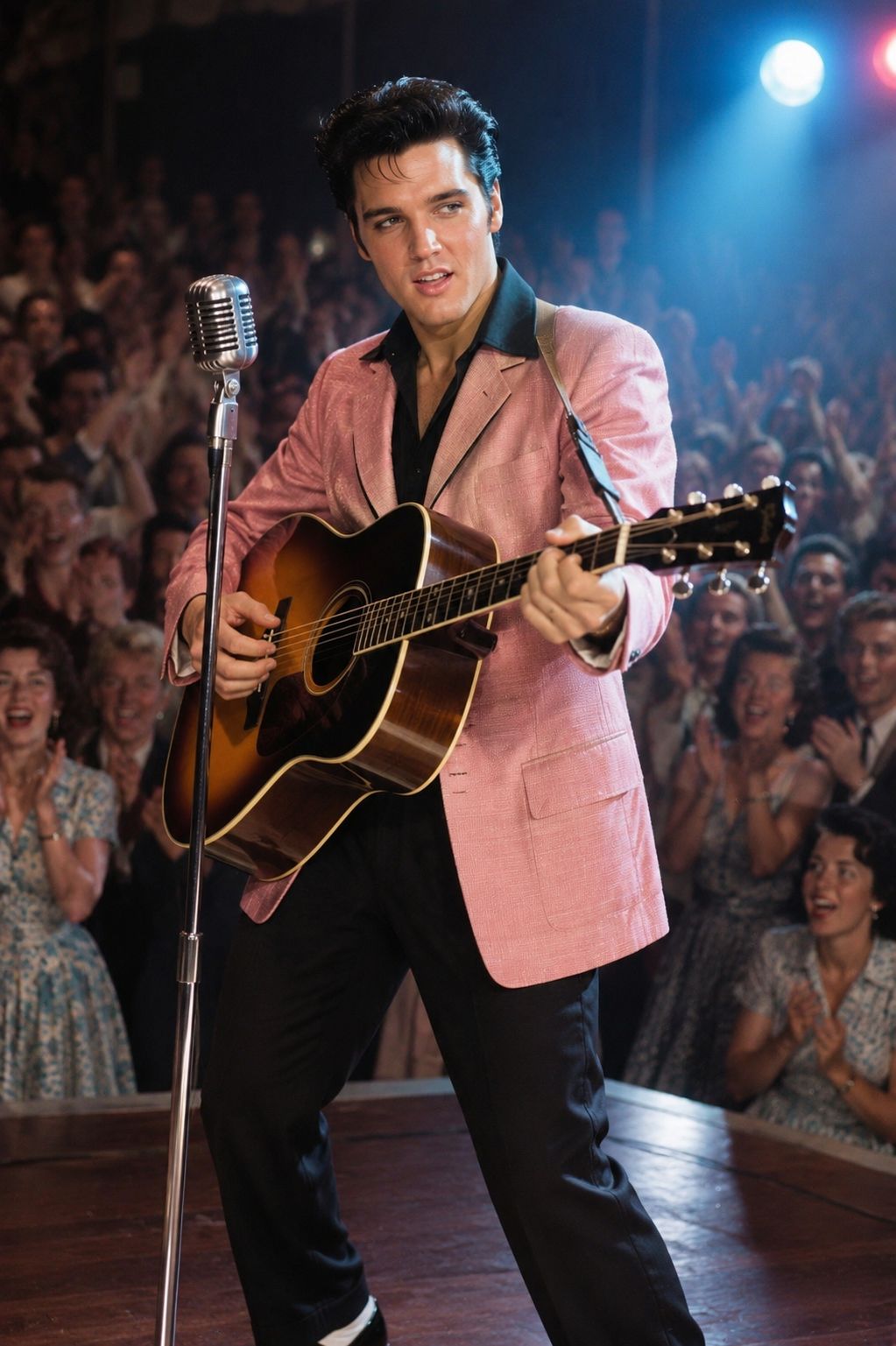
1956 — When Elvis Presley Released “Heartbreak Hotel” and the World Changed Forever
There are moments in music history that feel bigger than songs.
Moments that sound like a door being kicked open.
Moments when the world hears a voice and suddenly realizes nothing will ever be the same again.
In early 1956, that moment arrived with a dark, lonely ballad called “Heartbreak Hotel.”
Nobody—not the radio executives, not the newspaper critics, not even many in Nashville—was fully prepared for what would happen next.
And yet within weeks, a young man from Memphis with slicked-back hair, trembling lips, and a dangerous kind of charisma would become the most talked-about entertainer on Earth.
The song was haunting.
The voice was raw.
And the reaction was explosive.
By the time “Heartbreak Hotel” climbed the charts, Elvis Presley was no longer just another Southern singer.
He had become a global sensation.
The Lonely Song That Didn’t Sound Like a Hit
Ironically, “Heartbreak Hotel” was never designed to sound safe.
It wasn’t cheerful.
It wasn’t polished.
It certainly didn’t sound like the clean pop records dominating radio in the mid-1950s.
Instead, the song felt eerie.
The opening line alone sounded like something from another world:
“Well, since my baby left me…”
There was pain in it.
Not theatrical pain. Real pain.
The inspiration reportedly came from a newspaper story about a lonely man who died by suicide, leaving behind a note that read: “I walk a lonely street.” Songwriters Mae Boren Axton and Tommy Durden transformed that sadness into something haunting and unforgettable.
Then came Elvis.
And suddenly the song became more than music.
It became emotion people could feel in their bones.
His voice didn’t merely sing heartbreak—it trembled with it.
The echo-heavy production made the record feel isolated and ghostly, almost like Elvis was singing from the end of a long empty hallway.
For teenagers drowning in postwar conformity, it sounded honest.
For adults, it sounded dangerous.
And for America?
It sounded impossible to ignore.
Before “Heartbreak Hotel,” Elvis Was Still a Question Mark
People forget that before 1956, Elvis Presley was not yet “The King.”
He was still an unpredictable newcomer from the South.
Yes, he had regional success at Sun Records.
Yes, audiences noticed his unusual blend of country, gospel, rhythm and blues, and rockabilly.
But the music industry still didn’t know what to do with him.
Was he country?
Was he rock and roll?
Was he rhythm and blues?
The truth was more unsettling:
He was all of them at once.
That terrified traditionalists.
Elvis represented a cultural collision happening in real time inside America. White teenagers were suddenly listening to music heavily inspired by Black artists. Southern energy was crashing into mainstream pop culture. The old rules about race, sound, performance, and sexuality were beginning to crack.
And standing at the center of that earthquake was a 21-year-old kid who moved like nobody audiences had ever seen before.
Then “Heartbreak Hotel” exploded.
Everything changed overnight.
The Television Performances That Shocked America
Radio made the song famous.
Television made Elvis immortal.
When Elvis Presley appeared on programs like Stage Show in 1956, viewers couldn’t stop staring.
Not because of the song alone.
Because of him.
The movements.
The confidence.
The vulnerability mixed with rebellion.
Parents were horrified.
Teenagers were hypnotized.
“He doesn’t just sing the song,” one critic reportedly complained at the time.
“He attacks it.”
That was exactly the point.
Elvis didn’t perform like earlier crooners who stood politely beside orchestras.
He looked consumed by the music.
Every twitch of his body felt spontaneous.
Every facial expression looked emotionally exposed.
For young fans, especially girls, it created hysteria unlike anything American entertainment had seen in years.
Crowds screamed so loudly at concerts that people sometimes couldn’t hear the songs.
Reporters described scenes that resembled chaos.
Church leaders condemned him.
Commentators mocked him.
But every criticism only made him bigger.
Because underneath the controversy was an uncomfortable truth:
America had never seen a star this emotionally electric before.
“Heartbreak Hotel” Became the Soundtrack of Teenage Loneliness
Part of the song’s power came from timing.
The 1950s are often remembered as cheerful and clean-cut, but beneath the surface many teenagers felt trapped inside expectations they didn’t choose.
“Heartbreak Hotel” gave those feelings a soundtrack.
It sounded isolated.
Restless.
Hungry.
Elvis wasn’t singing as a polished adult entertainer speaking down to young listeners.
He sounded like one of them.
That emotional connection became revolutionary.
Suddenly teenagers weren’t just passive consumers of music.
They were a cultural force.
And Elvis became their symbol.
“If your baby leaves you,” Elvis sang,
“you’ve got a tale to tell.”
It was heartbreak, yes.
But it was also identity.
The song told young people their emotions mattered.
That intensity mattered.
That loneliness mattered.
Today, that may seem normal in popular music.
In 1956, it was explosive.
Fame Arrived Faster Than Anyone Could Control
The success of “Heartbreak Hotel” was staggering.
The record shot to No. 1 across multiple charts.
Sales exploded nationally.
Fans mobbed appearances.
Newspapers covered Elvis constantly.
Within months, he had become more than a singer.
He became a phenomenon.
And with fame came pressure.
A tremendous amount of pressure.
Suddenly every move Elvis made was analyzed.
Adults blamed him for corrupting youth.
Television networks debated how much of his dancing should be shown.
Religious groups condemned the sensuality of his performances.
Yet behind the headlines was still a young man trying to survive a tidal wave of attention.
People saw confidence onstage.
But many who knew Elvis personally described someone surprisingly shy, deeply emotional, and eager to please.
That contradiction became central to his life.
The louder the world screamed his name, the lonelier he sometimes became.
Ironically, the man who made “Heartbreak Hotel” famous would spend much of his life struggling with isolation himself.
Why the Song Still Matters Decades Later
Nearly seventy years later, “Heartbreak Hotel” still feels alive.
Not because it was technically perfect.
Not because it followed rules.
But because it captured a human feeling that never disappears:
The fear of being alone.
That emotional honesty became the foundation of Elvis Presley’s legacy.
Long before stadium rock.
Long before massive tours.
Long before celebrity culture became globalized.
There was one strange, haunting record that changed everything.
And there was one young singer brave enough to make people uncomfortable.
Without “Heartbreak Hotel,” modern rock stardom might look entirely different.
Artists from The Beatles to Bruce Springsteen to Chris Stapleton have echoed pieces of that emotional vulnerability in their own careers.
Because Elvis proved something powerful in 1956:
A song doesn’t have to sound polished to change history.
Sometimes it just has to feel true.
The Real Reason “Heartbreak Hotel” Changed the World
People often describe Elvis Presley as a symbol of rebellion.
But the deeper truth is more emotional than rebellious.
He made people feel seen.
Especially young people who felt misunderstood, lonely, emotional, or restless.
“Heartbreak Hotel” was not merely a hit single.
It was an emotional earthquake disguised as a rock and roll song.
And when Elvis stepped up to the microphone in 1956, America didn’t simply hear a new artist.
It heard the future arriving.
Loudly.
Lonely.
Beautifully.
And the world has never sounded the same since.