Introduction
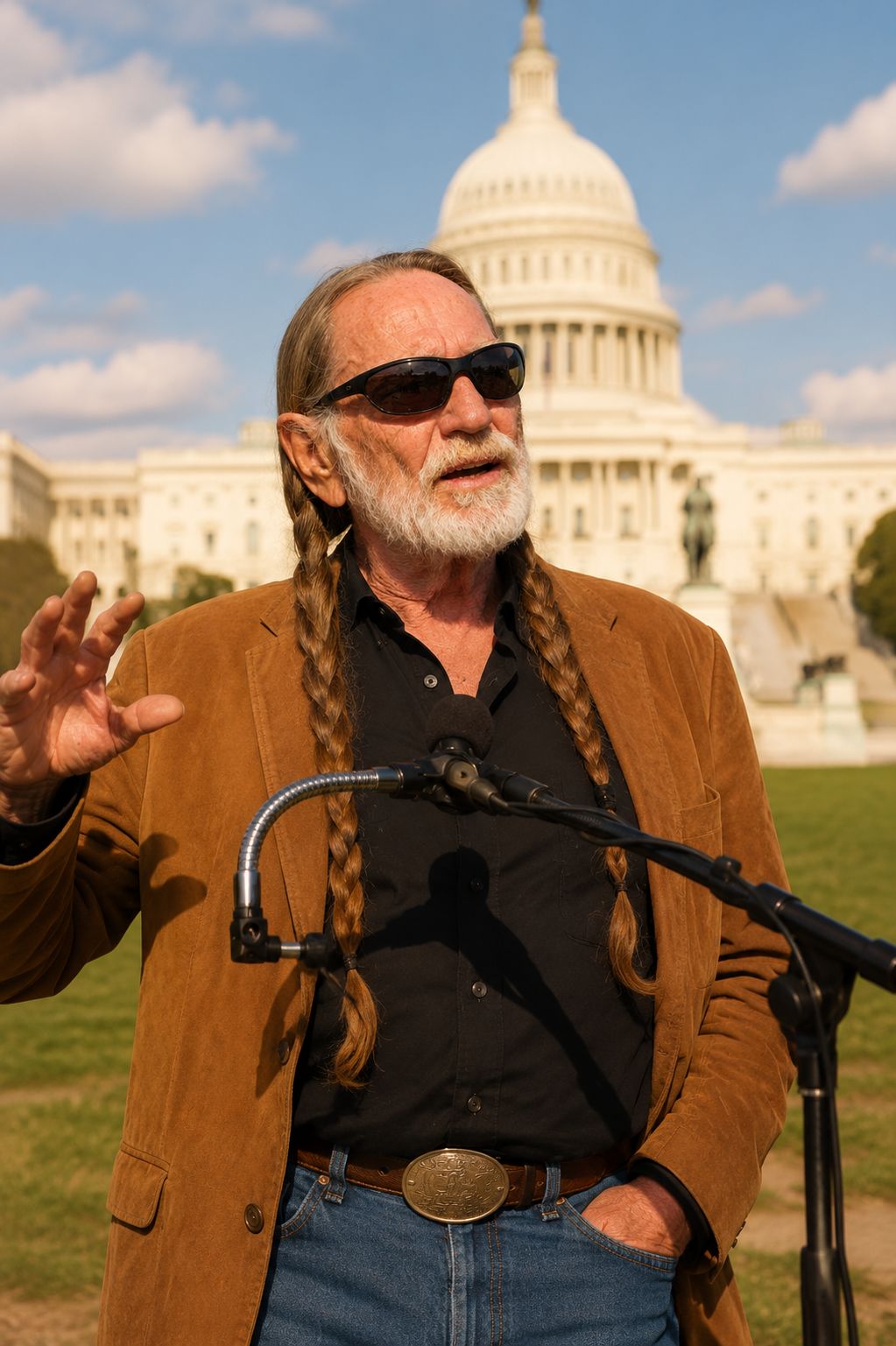
There was a time when nobody in Nashville believed Willie Nelson could become a star.
Not because he couldn’t write.
Everyone knew he could write.
The problem, according to the music industry gatekeepers, was his voice.
Too nasal.
Too strange.
Too far from the polished sound dominating country radio in the late 1950s and early 1960s.
Nashville loved Willie Nelson’s songs.
They just didn’t think anyone wanted to hear Willie Nelson sing them.
Ironically, that rejection would become one of the greatest mistakes in country music history.
Because the very voice they tried to silence would one day become one of the most recognizable sounds America had ever heard.
The Dream That Brought Him To Nashville
When Willie Nelson arrived in Nashville, he wasn’t carrying the confidence of a future legend.
He was carrying hope.
Born in Abbott, Texas, Willie had already spent years grinding through small-town dance halls, radio stations, and rough honky-tonks. He wasn’t chasing fame as much as he was chasing survival.
Like thousands of aspiring musicians before him, Nashville seemed like the promised land.
But dreams can be expensive.
And Nashville quickly taught him that talent alone wasn’t enough.
Willie was unlike the clean-cut stars that record executives preferred. He didn’t fit the mold.
His singing drifted behind the beat.
His phrasing felt conversational.
His melodies bent in unexpected ways.
To executives searching for the next polished radio voice, Willie sounded like a risk.
To history, he sounded like originality.
At the time, however, originality wasn’t what Nashville was buying.
The Songs Were Worth More Than The Singer
The painful truth was that Willie found success almost immediately—as a songwriter.
Just not as an artist.
One by one, other performers began recording his material.
And those songs became hits.
Massive hits.
Suddenly, the struggling Texan was watching other people climb the charts using words he had written at kitchen tables and in cheap apartments.
Imagine creating something beautiful and then watching someone else become famous for it.
Again.
And again.
And again.
That was Willie’s reality.
“The songs opened doors for everyone except the man who wrote them.”
One of the most famous examples came when Patsy Cline recorded “Crazy.”
The song became legendary.
Today, it’s considered one of the greatest country songs ever written.
But while the record was selling millions, Willie was still struggling financially.
The success of his songwriting reputation didn’t instantly translate into wealth.
Bills still arrived.
Rent still needed to be paid.
Groceries still needed to be bought.
There were times when Willie sold songs outright simply because he needed money immediately.
Not because he wanted to.
Because he had to.
And every songwriter understands the heartbreak hidden inside that reality.
Nashville Wanted Him To Conform
The industry had a simple message:
If Willie wanted success, he needed to change.
Sing differently.
Look differently.
Sound differently.
Become someone else.
But there was one problem.
Willie Nelson didn’t know how to be anyone except Willie Nelson.
The more Nashville tried to smooth his edges, the less authentic he felt.
The polished “Nashville Sound” was dominating country music at the time. Strings, background vocals, and carefully controlled production created records designed for mass appeal.
Willie respected the system.
But he never fully belonged inside it.
He was a songwriter whose instincts came from Texas dance halls.
A storyteller whose voice carried imperfections.
A musician who valued feeling more than perfection.
The very things executives considered flaws would later become his greatest strengths.
The Rejection That Changed Everything
Most artists break after years of rejection.
Willie Nelson broke free.
That’s what makes his story different.
Instead of spending the rest of his life trying to earn Nashville’s approval, he eventually stopped asking for it.
The turning point wasn’t a single dramatic moment.
It was a gradual realization.
If the industry didn’t want him as he truly was, maybe he needed to build something outside the industry.
That idea sounded almost impossible at the time.
Nashville controlled country music.
Radio controlled success.
Record labels controlled careers.
Yet Willie slowly began moving toward a different vision.
One based on freedom.
One based on authenticity.
One based on being himself.
And that’s when everything changed.
The Birth Of An Outlaw
By the early 1970s, Willie Nelson had become something Nashville never expected.
A rebel.
Not the angry kind.
The authentic kind.
His move back toward Texas culture and his embrace of creative independence helped spark what would become the Outlaw Movement.
Alongside artists like Waylon Jennings, Willie challenged many of the rules that had governed country music for years.
The irony was breathtaking.
The man Nashville considered too unusual suddenly became one of the most influential artists in America.
Fans weren’t rejecting his voice.
They were embracing it.
Because they heard something real.
Every crack.
Every pause.
Every unusual phrase.
Every imperfection.
It sounded human.
And human beings were hungry for authenticity.
“The voice Nashville called strange became the voice millions trusted.”
Willie’s records no longer sounded like everyone else’s.
They sounded like Willie Nelson.
That distinction made all the difference.
Why His Voice Finally Connected
The secret wasn’t that Willie learned to sing better.
The secret was that audiences learned to appreciate honesty.
His voice carried experience.
Heartbreak.
Humor.
Wisdom.
Loneliness.
Hope.
When Willie sang, listeners didn’t hear technical perfection.
They heard life.
And life rarely arrives polished.
That’s why songs like “Blue Eyes Crying in the Rain” resonated so deeply.
That’s why concert crowds felt connected to him.
That’s why generations of fans continue discovering his music decades later.
His voice became proof that emotional truth matters more than vocal perfection.
In many ways, Willie changed the definition of what a country star could sound like.
The Legacy Of Being Different
Today, it’s almost impossible to imagine country music without Willie Nelson.
His braids.
His guitar.
His songwriting.
His unmistakable voice.
They’re woven into the fabric of American music.
But none of it was guaranteed.
There was a moment when industry experts looked directly at his talent and got it completely wrong.
They believed his songs had value.
They believed his voice did not.
History delivered a different verdict.
The songs became classics.
The voice became legendary.
And the combination created immortality.
That is perhaps the most powerful lesson in Willie Nelson’s journey.
Sometimes rejection isn’t proof that you’re wrong.
Sometimes it’s proof that you’re early.
The qualities that make you different today may become the qualities that define you tomorrow.
Willie Nelson never became the singer Nashville wanted.
Instead, he became something far greater.
He became the artist nobody else could be.
And decades later, when that familiar voice drifts from a radio speaker, it serves as a reminder that authenticity often wins the longest race.
“They wanted his songs, not his voice. In the end, the voice became just as timeless as the songs.”
That is how Willie Nelson transformed rejection into legacy, doubt into freedom, and an unconventional voice into one of the most enduring sounds country music has ever known.
Video