Introduction
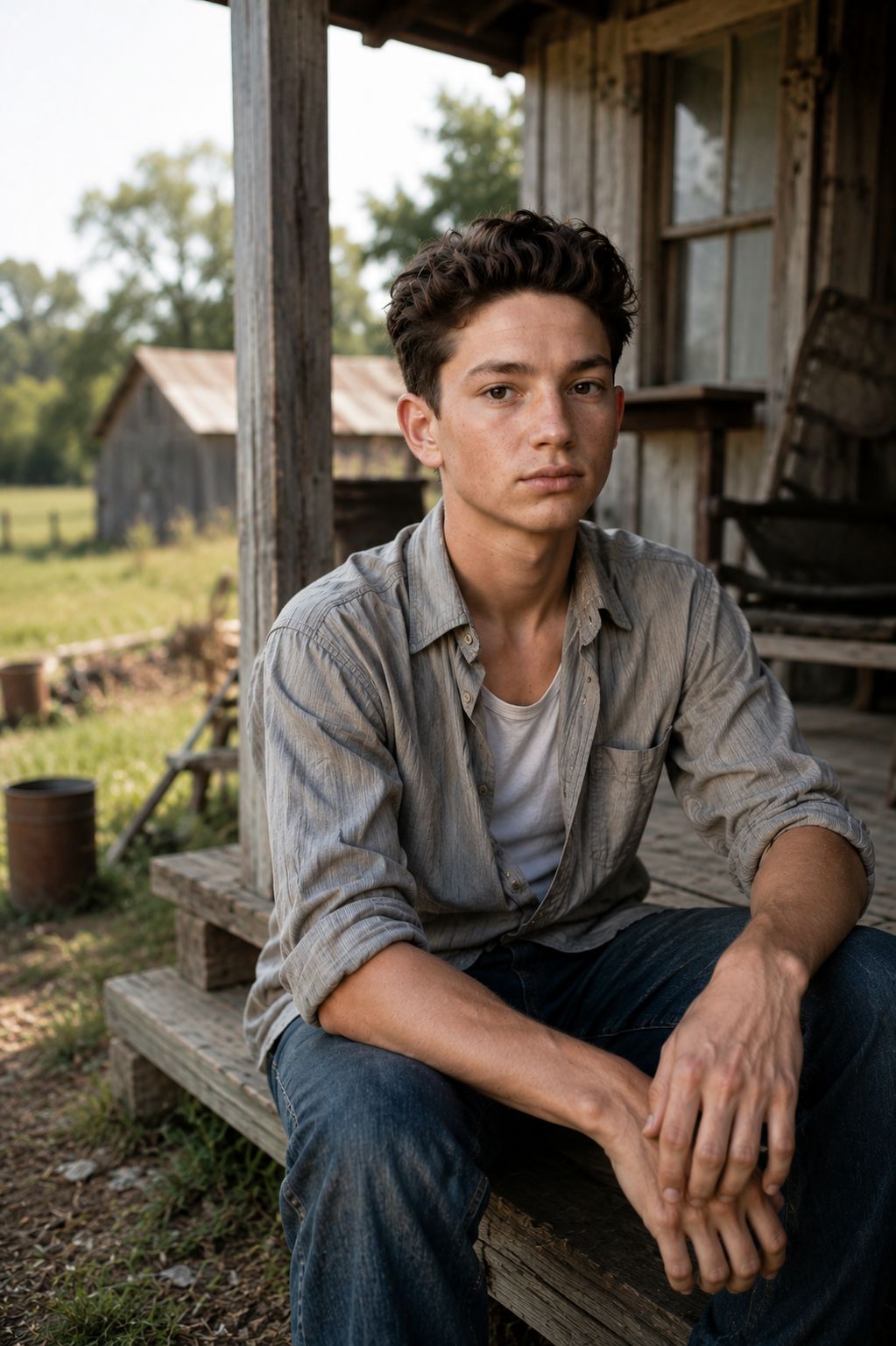
There’s something haunting about the way Willie Nelson sings pain.
Not the polished kind of pain that comes from heartbreak songs written in expensive studios. His voice carries something older. Rougher. The kind of sadness that only comes from surviving years of hunger, loneliness, rejection, and uncertainty.
Before the braids…
Before the outlaw image…
Before the sold-out arenas and legendary status…
Willie Nelson was just a poor Texas boy trying to survive another day.
And the truth is, he was born with almost nothing.
In the middle of the Great Depression, on April 29, 1933, Willie Hugh Nelson entered the world in Abbott, Texas — a tiny farming town where life was brutally hard and dreams were considered luxuries.
His parents struggled constantly.
His father, Ira Nelson, drifted in and out of the family’s life. His mother, Myrle, eventually left too. Willie and his older sister Bobbie were abandoned at an age when most children still believed adults could fix everything.
But nobody came to save them.
Their grandparents raised them instead, barely scraping by in a small house with little money and even less certainty about tomorrow.
“We didn’t have much of anything,” Willie once admitted.
“But we had music.”
That music became oxygen.
His grandparents introduced him to gospel hymns, old country tunes, and the sound of faith carried through melody. While other children played carefree games, Willie learned early that music could numb pain for a little while.
And pain was everywhere.
The Texas heat was relentless.
The fields demanded labor.
As a child, Willie picked cotton under the burning sun just to help keep food on the table. Imagine that for a moment: the future legend of country music, hands raw from labor, sweating through endless days while wondering if life would ever become more than survival.
There were no guarantees.
No connections.
No wealthy supporters.
Only struggle.
And perhaps that’s why his songs would later connect so deeply with ordinary people. Willie never had to imagine what desperation felt like — he lived it.
Every lyric he wrote carried pieces of those early years.
School offered little escape.
Willie was small, shy, and often isolated. Poverty has a way of making children feel invisible. While others arrived with confidence, Willie carried embarrassment like a shadow.
But when he picked up a guitar, something changed.
At just six years old, his grandfather bought him his first guitar and taught him a few chords. That small instrument became the doorway to another world.
Suddenly, the lonely boy from Abbott had a voice.
By age seven, he was writing songs.
By ten, he was performing locally.
Not because fame seemed possible…
But because music was the only place he truly felt seen.
“I think music saved my life,” Willie later reflected.
And honestly, it probably did.
Still, survival remained brutal.
As a teenager, Willie worked every job he could find:
Cotton picker.
Dishwasher.
Saddle maker’s helper.
Tree trimmer.
Dance hall performer.
Nothing came easy.
Many nights, he played music simply to earn enough money for food or gas. The glamorous mythology surrounding country legends often hides the reality behind their rise. For Willie Nelson, there was no overnight success.
There were years of rejection.
Years.
After high school, Willie briefly joined the Air Force, hoping it might offer stability. But even that dream collapsed quickly after medical issues forced him out.
So he returned to the grind.
He attended Baylor University for a short time but dropped out because he couldn’t afford to stay. Poverty kept pulling him backward no matter how hard he tried to move forward.
At one point, he sold encyclopedias door-to-door.
Think about that irony.
One of the greatest songwriters in American history walking neighborhood streets, desperately trying to convince strangers to buy books just so he could survive another week.
And still, the music industry ignored him.
When Willie moved to Nashville years later, things didn’t magically improve.
In fact, many executives hated his style.
His voice sounded “too different.”
His phrasing was “too strange.”
His look wasn’t polished enough.
He didn’t fit the mold of what country music was supposed to be.
But that rejection wasn’t new to Willie Nelson.
He’d been underestimated his entire life.
And maybe that’s exactly why he refused to quit.
One of the saddest truths about Willie’s early years is how loneliness followed him everywhere.
Even after becoming a songwriter in Nashville, success often belonged to other people singing his words. He wrote classics like “Crazy” for Patsy Cline and songs recorded by major stars, yet his own career remained painfully uncertain.
Imagine hearing crowds applaud songs you created… while still wondering if you’ll ever truly make it yourself.
That kind of emotional exhaustion changes a person.
It either breaks you…
Or hardens your spirit into steel.
For Willie, it did both.
The heartbreak in his music wasn’t manufactured.
It came from abandonment.
From poverty.
From sleeping in cheap rooms.
From feeling forgotten.
From years spent chasing a dream that seemed determined to reject him.
That’s why millions connected with him later.
Because Willie Nelson never sounded fake.
He sounded human.
“There’s a freedom you begin to feel the closer you get to losing everything.”
That quote feels like the summary of Willie’s entire life.
He understood suffering so deeply that fear eventually lost its power over him.
When the outlaw country movement finally exploded in the 1970s, audiences weren’t just hearing catchy songs.
They were hearing survival stories.
Every wrinkle on Willie’s face…
Every crack in his voice…
Every pause between lyrics…
It all carried history.
People trusted him because he had actually lived the life country music talked about.
Not the commercial version.
The real version.
The empty pockets.
The broken homes.
The endless highways.
The uncertainty.
Willie Nelson became more than a singer.
He became proof that broken beginnings do not decide your ending.
And perhaps that’s the most powerful part of his story.
Today, the world sees a legend:
The bandana.
The braids.
The iconic guitar Trigger.
The awards.
The fame.
But underneath all of that is still the abandoned child from Abbott, Texas.
The boy who picked cotton in the heat.
The teenager playing bars for survival money.
The struggling songwriter nobody believed in.
That version of Willie never disappeared.
He simply learned how to turn pain into poetry.
In a world obsessed with instant success, Willie Nelson’s journey feels almost impossible now.
Modern audiences rarely see the decades of hardship behind greatness. But Willie’s story reminds us that legends are often built slowly — through suffering, resilience, rejection, and persistence.
Not privilege.
Not luck.
Endurance.
And maybe that’s why his music still hits people so hard today.
Because somewhere deep inside every Willie Nelson song is the voice of a poor Texas kid who once had absolutely nothing… except hope and a guitar.
Video