Introduction
There are concerts that entertain. There are concerts that make history. And then there are concerts that change culture itself.
For country music fans, few events carry the legendary weight of the 1974 gathering in Texas known as the Dripping Springs Reunion, a moment deeply associated with Willie Nelson and the birth of what would become the Outlaw Country movement.
What happened that day was bigger than music.
It was a collision of worlds that had spent years distrusting each other: long-haired hippies from the cities and rough-edged rural Texans often called rednecks. Against all odds, they found themselves singing the same songs, sharing the same fields, and discovering they had more in common than anyone imagined.
And at the center of it all stood Willie Nelson.
A Texas Divided
The early 1970s were a turbulent time in America.
The Vietnam War had fractured families. Political tensions ran high. Cultural lines seemed impossible to cross.
On one side were the counterculture youth—the hippies with long hair, tie-dye shirts, and dreams of freedom.
On the other were working-class rural Americans who often viewed the counterculture with suspicion.
The media loved portraying these groups as enemies.
But Texas was beginning to tell a different story.
In the dance halls, beer joints, and roadside venues across the state, something unexpected was happening. Young rock fans were discovering country music. Traditional country listeners were warming to artists who challenged Nashville’s rigid rules.
No artist embodied that transformation more completely than Willie Nelson.


The Man Who Didn’t Fit Anywhere
Before becoming a cultural icon, Willie Nelson was viewed as an outsider.
His unconventional singing style didn’t fit Nashville’s polished expectations. His songwriting genius was respected, but industry executives often struggled to market him.
Then something changed.
Willie grew his hair long.
He returned to Texas.
And instead of trying to fit into Nashville, he created something entirely new.
His music blended traditional country storytelling with the free-spirited energy of rock culture. Suddenly, audiences who had never cared about country music were showing up to hear him perform.
At the same time, lifelong country fans recognized that beneath the rebellious image was an authentic Texan who understood their lives.
Willie became a bridge between worlds.
The Gathering That Nobody Expected
When thousands descended upon Dripping Springs, just outside Austin, many observers weren’t sure what would happen.
The crowd was unlike anything country music had ever seen.
There were cowboys.
There were bikers.
There were college students.
There were ranch hands.
There were veterans.
There were hippies.
Many arrived expecting a concert.
Instead, they witnessed a cultural revolution.
People who had spent years being told they should dislike each other found themselves standing shoulder to shoulder under the Texas sky.
The atmosphere felt electric.
Not because of conflict.
Because of connection.
“The barriers people assumed existed simply began to disappear.”
As the music played, labels mattered less.
The songs became the common language.
Why Willie Was the Perfect Messenger
The miracle of the event wasn’t accidental.
It happened because Willie Nelson represented authenticity.
Country audiences trusted him because he was one of them.
Counterculture audiences embraced him because he rejected artificial expectations and valued personal freedom.
In many ways, Willie carried elements of both worlds within himself.
He could sing heartbreaking country ballads one moment and embody rebellious independence the next.
That rare combination gave him credibility across cultural lines.
Few artists before him had managed such a feat.
Even fewer have done it since.


The Birth of Outlaw Country
The impact of the concert stretched far beyond a single day.
It helped fuel the movement that became known as Outlaw Country.
Artists like Waylon Jennings, Jessi Colter, and later countless others would embrace the idea that country musicians didn’t need Nashville’s permission to be themselves.
The movement wasn’t merely about music.
It was about independence.
Creative freedom.
And authenticity.
Those values resonated equally with a ranch worker driving a pickup truck and a college student listening to rock records.
The supposed cultural divide suddenly looked much smaller.
A Moment That Changed Texas Forever
Many legendary concerts are remembered for spectacular performances.
This one is remembered because of the people.
Attendees often described the experience as surprisingly peaceful.
The stereotypes everyone brought with them slowly dissolved.
The hippies discovered that rural Texans weren’t the villains they had imagined.
The rednecks discovered that long-haired music lovers weren’t so different from themselves.
Both groups loved freedom.
Both groups valued individuality.
Both groups loved great songs.
And Willie Nelson gave them a place to recognize it.
“For one remarkable moment, Texas became a picture of what America could be.”
That may sound dramatic.
But the stories that emerged from the gathering support exactly that conclusion.
The Ripple Effect Across American Music
The influence of that historic Texas concert can still be felt today.
Modern country music festivals routinely attract audiences from vastly different backgrounds.
The idea that country music belongs to one specific demographic seems increasingly outdated.
Artists move freely between genres.
Fans embrace diverse influences.
The walls separating musical communities have become much lower.
Much of that evolution can be traced back to pioneers like Willie Nelson who refused to accept cultural boundaries.
He proved that authenticity travels farther than labels.
When people connect emotionally with music, political and cultural divisions often become less important.
That lesson remains relevant decades later.
The Legacy of a Texas Legend
Today, Willie Nelson is celebrated not only as one of country music’s greatest songwriters but also as a cultural unifier.
His career has always defied easy categorization.
He is simultaneously traditional and rebellious.
Rural and universal.
Country and beyond country.
That unique identity was on full display during the historic Texas gathering that helped reshape American music.
The event wasn’t perfect.
No historic moment ever is.
But its symbolism remains powerful.
Thousands of people arrived carrying assumptions about one another.
They left carrying memories.
And those memories helped create a new vision of what country music could become.
More Than a Concert
Looking back, the Dripping Springs gathering feels almost mythical.
A sea of people from different walks of life.
A Texas landscape stretching toward the horizon.
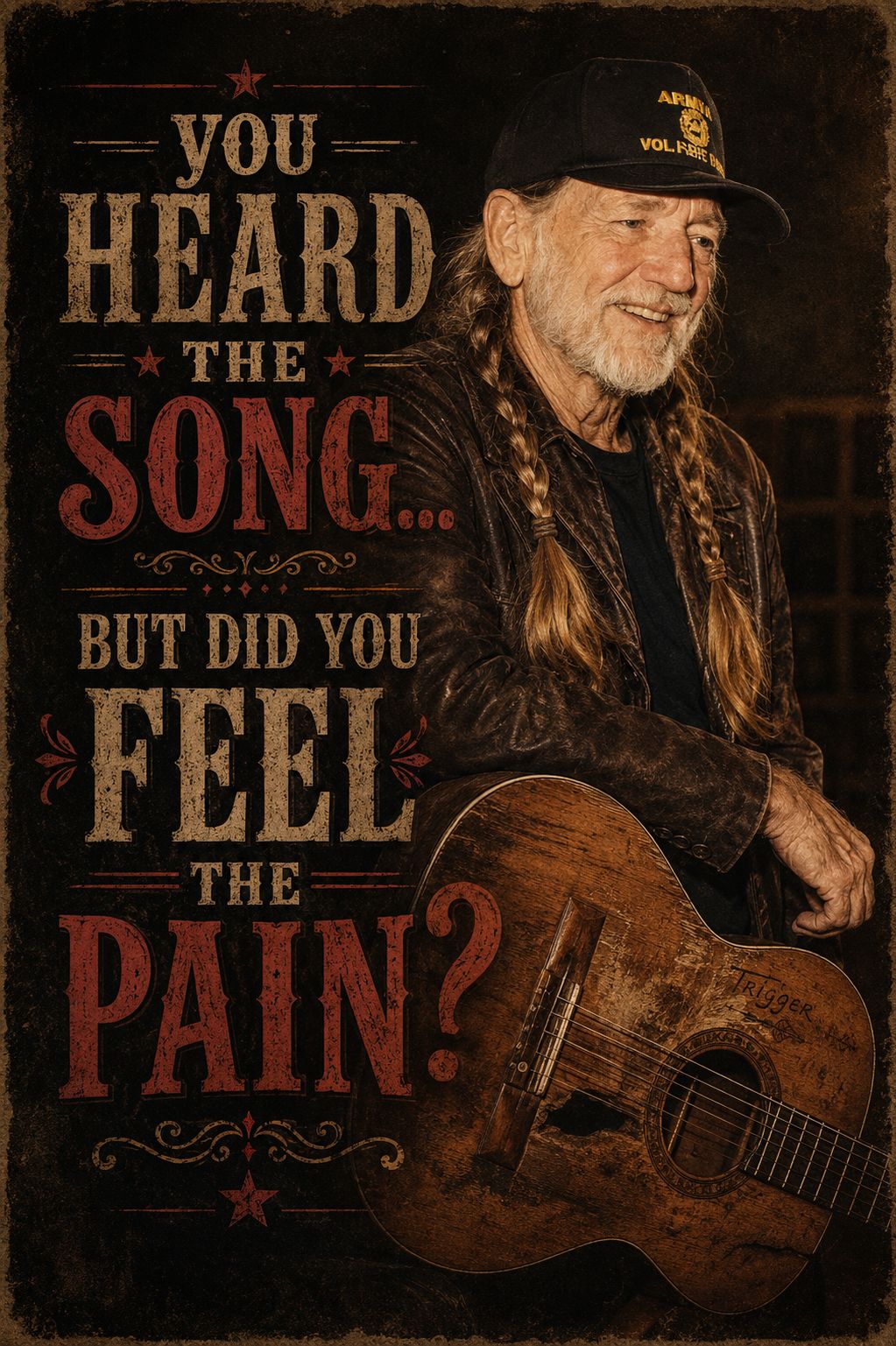
A musician with a battered guitar named Trigger.
And songs powerful enough to make strangers feel like neighbors.
That is why the story continues to resonate.
Because it wasn’t merely about Willie Nelson.
It was about the possibility that music can accomplish something politics, media, and social divisions often cannot.
It can remind people of their shared humanity.
“For a few unforgettable hours in Texas, hippies and rednecks stopped seeing differences and started hearing the same song.”
And thanks to Willie Nelson, America has been listening ever since.