Introduction
There are artists who become famous.
And then there are artists who split history into before and after.
Elvis Presley was not just a singer. He was an earthquake.
Before Elvis, popular music was polished, controlled, and predictable. Young people listened quietly while adults decided what “acceptable” music sounded like. Radio stations kept genres separated. Country belonged to one audience. Rhythm and blues belonged to another. The world was divided by race, class, and tradition.
Then came a young truck driver from Memphis with a trembling voice, slick hair, and a sound nobody could fully explain.
And suddenly… music would never be the same again.
The Boy Who Didn’t Belong
Elvis grew up poor in the American South during a time when struggle shaped everyday life. He lived in a tiny home, surrounded by gospel music in church, country songs on the radio, and blues echoing through Memphis streets.
Most artists stayed inside one musical lane.
Elvis absorbed everything.
He listened to Black gospel choirs. He studied blues musicians. He admired country singers. He loved raw emotion more than technical perfection.
That became his secret weapon.
“Elvis didn’t just sing songs. He made people feel exposed.”
When he walked into Sun Records in 1953, nobody could have predicted what was coming. Legend says he only wanted to record a song for his mother.
But producer Sam Phillips noticed something unusual.
Elvis sounded different.
Not polished enough for traditional pop.
Too country for rhythm and blues.
Too emotional for conservative radio.
In other words… he was revolutionary.
The Moment America Changed
Everything exploded with songs like “That’s All Right” and later “Heartbreak Hotel.”
Young listeners heard freedom in Elvis’s voice.
Adults heard danger.
And that tension became the fuel that launched modern rock and roll.
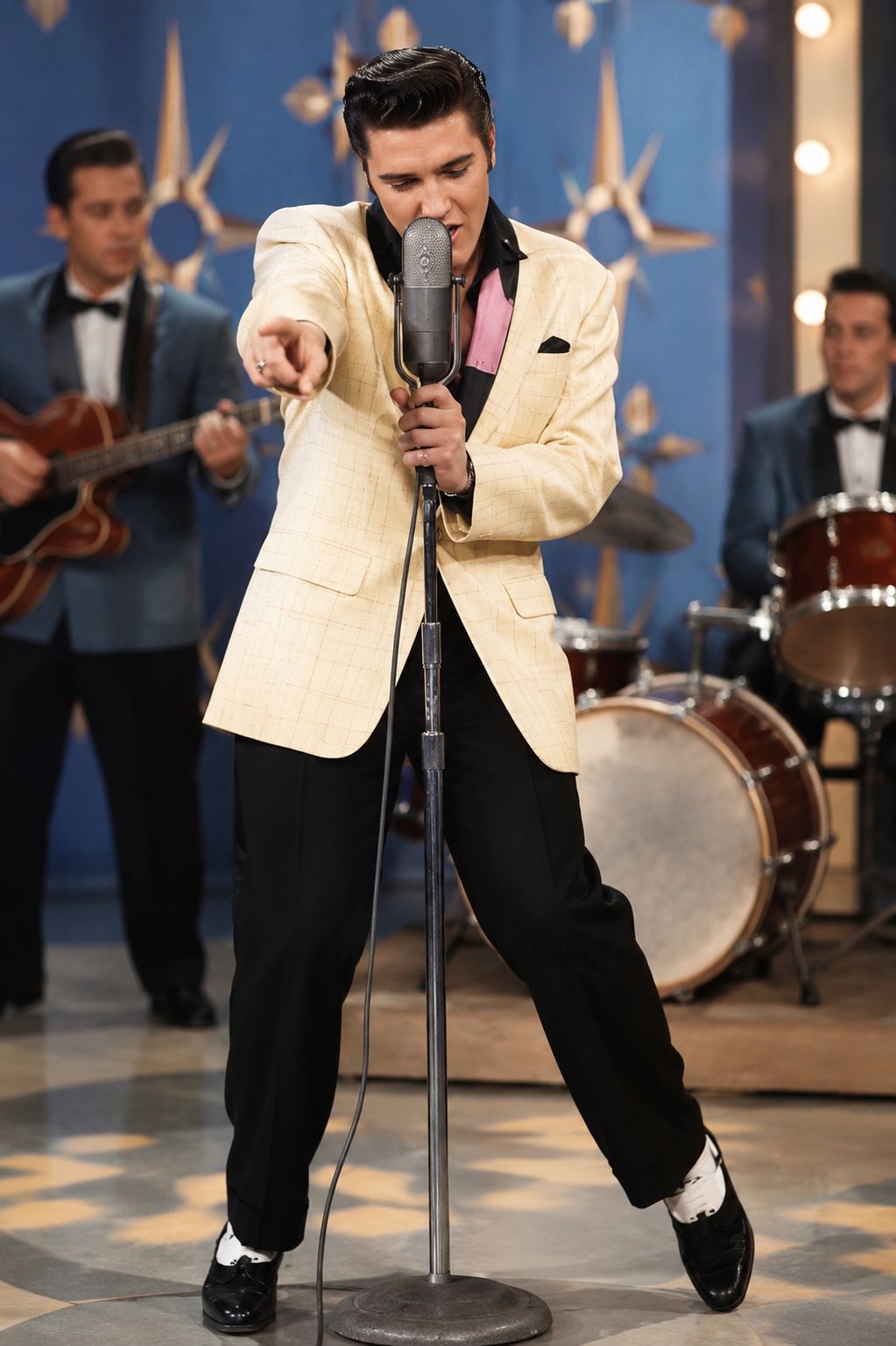
His performances were unlike anything television audiences had ever seen. He moved with energy that felt wild, rebellious, even shocking for the 1950s.
Parents were horrified.
Teenagers were hypnotized.
“When Elvis appeared on television, America wasn’t just watching a singer. It was watching a cultural rebellion.”
Girls screamed. Churches criticized him. Newspapers attacked him. Politicians worried he was corrupting youth.
But the louder the outrage became, the bigger Elvis grew.
Because for the first time, young people felt like music belonged to them.
Elvis Broke Musical Walls
One reason Elvis changed music forever was his ability to blend genres that society tried to keep apart.
At the time, America was still deeply segregated. Black artists often created groundbreaking music without receiving mainstream recognition.
Elvis helped bring elements of rhythm and blues into popular culture on a massive scale.
That influence changed everything.
Rock music was born from collision:
- Black blues
- Southern gospel
- Country storytelling
- Raw youthful energy
Elvis became the face of that explosion.
Some critics later debated his role in music history, but even many legendary Black musicians acknowledged his impact on bringing rock and roll into mainstream America.
Without Elvis, the doors may have opened far slower.
And once those doors opened, there was no closing them.
The Birth of the Modern Superstar
Before Elvis, singers mostly stood still and performed politely.
Elvis transformed performance into emotion, movement, and identity.
He didn’t just sing songs.
He lived them.
Artists after him realized something important:
Fans no longer wanted perfect performers.
They wanted authenticity.
Passion.
Pain.
Danger.
You can trace the DNA of modern music icons directly back to Elvis:
- The Beatles
- Michael Jackson
- Prince
- Bruce Springsteen
- Garth Brooks
Many of them openly admitted Elvis inspired them to pursue music.
Even John Lennon once famously said:
“Before Elvis, there was nothing.”
That statement may sound dramatic.
But emotionally, millions agreed.
He Made Music Feel Dangerous Again
Part of Elvis’s magic came from the fact that he represented freedom during a very controlled era.
The 1950s valued conformity. Dress properly. Behave properly. Stay quiet.
Elvis shattered that image.
His voice cracked with emotion.
His body moved unpredictably.
His style ignored old rules.
Young people saw possibility in him.
Not because he was perfect.
Because he wasn’t.
“Elvis gave ordinary people permission to feel extraordinary.”
That emotional connection became the foundation of modern fandom culture.
Today, when fans camp outside concerts, obsess over artists online, or feel emotionally attached to musicians — that phenomenon can be traced back to Elvismania.
He was one of the first artists to inspire mass emotional hysteria on a global scale.
The Pain Behind the Fame
But Elvis’s story is also tragic.
The same fame that made him immortal slowly consumed him.
As the years passed, the pressure became unbearable. Hollywood controlled his image. Endless touring exhausted him. Personal loneliness followed him everywhere.
Behind the glittering jumpsuits and sold-out arenas was a man searching for peace.
And perhaps that is why Elvis still feels human decades later.
He was not just a legend.
He was vulnerable.
He carried insecurity, fear, and emotional exhaustion beneath the spotlight.
“The world saw a king. But inside, Elvis was often just a tired man trying to survive his own fame.”
That emotional contradiction made people love him even more.
Why Elvis Still Matters Today
Decades after his death, Elvis Presley remains one of the most recognizable figures in music history.
Not because nostalgia keeps him alive.
Because the world he helped create still exists.
Every time an artist blends genres…
Every time music challenges social norms…
Every time young people use music as rebellion…
Every time a performer turns vulnerability into power…
You can feel Elvis’s shadow.
Modern pop stars, rock singers, country artists, and performers across the globe still borrow from the blueprint he created.
His fingerprints are everywhere.
Even artists who sound nothing like Elvis inherited a world transformed by him.
The Legacy That Could Never Die
Elvis Presley didn’t merely change music.
He changed culture.
He changed performance.
He changed youth identity.
He changed how artists connected emotionally with audiences.
He changed what was considered acceptable in mainstream entertainment.
Most importantly…
He made music feel alive.
Not safe.
Not distant.
Alive.
And perhaps that is why people still speak his name with emotion generations later.
Because Elvis Presley was never just a celebrity.
He was the moment the modern music world began.