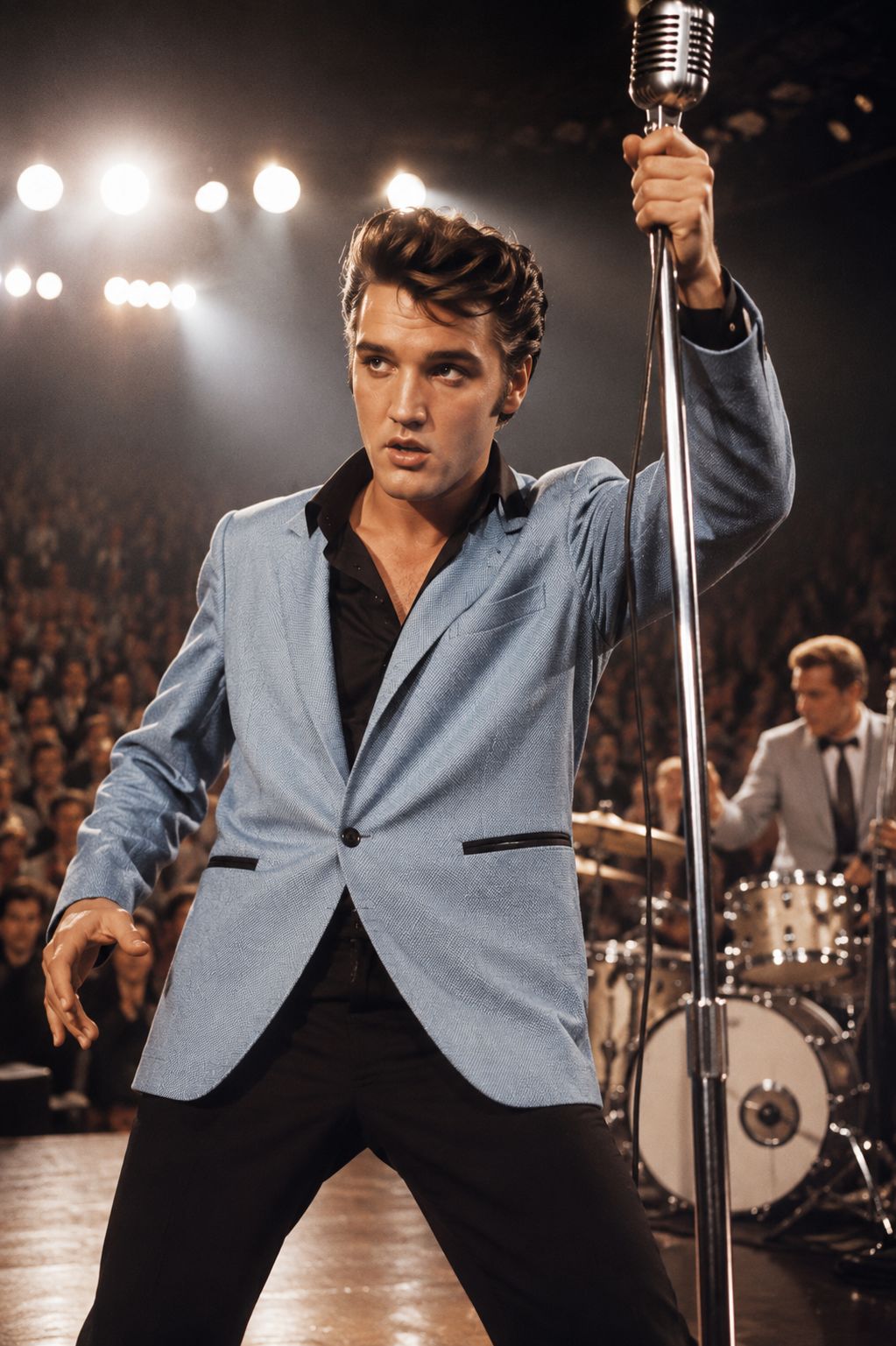
Introdcuction
There are moments in history that feel almost mythical.
A single performance. A single voice. A single night when the world before and after no longer looks the same.
For Country music… for Rock & Roll… for American culture itself… that moment arrived when a young truck driver from Memphis stepped in front of a microphone and shattered every rule people thought music had to follow.
Nobody watching truly understood it at first.
But after Elvis Presley appeared, music would never sound — or feel — the same again.
A Poor Southern Boy With a Dangerous Sound
Before the screaming crowds… before the gold records… before the white jumpsuits and worldwide fame… Elvis Presley was simply a shy kid raised in poverty.
He grew up surrounded by gospel music in church, Country music on the radio, and Blues echoing through the streets of Memphis. What made Elvis different wasn’t just talent.
It was that he absorbed everything.
At a time when America was deeply divided by race and tradition, Elvis carried sounds from Black Blues artists, Southern gospel singers, Country storytellers, and rhythm-and-blues musicians into one explosive style nobody could categorize.
That frightened people.
And it electrified young listeners.
Music executives in the 1950s were still searching for polished voices and clean-cut performers. Elvis looked different. Moved different. Sang different.
He sounded raw. Emotional. Alive.
“When Elvis sang, it didn’t feel rehearsed. It felt dangerous.”
That danger became his superpower.
The Recording Session That Sparked a Revolution
In 1954, Elvis walked into Sun Records, the tiny Memphis label owned by Sam Phillips.
Legend says Phillips was searching for a white singer who could capture the emotional soul of Black rhythm-and-blues music without losing Southern Country authenticity.
Then Elvis arrived.
During a late-night recording session with guitarist Scotty Moore and bassist Bill Black, something unexpected happened.
Elvis suddenly launched into a wild, upbeat version of “That’s All Right.”
The room changed instantly.
Nobody planned it. Nobody carefully crafted it.
It simply exploded into existence.
That recording fused Country twang, Blues rhythm, and youthful energy into something the world had never heard before.
Rock & Roll didn’t begin entirely with Elvis. Many Black pioneers had already laid the foundation. But Elvis became the bridge that carried that revolutionary sound into mainstream America.
And once the public heard it, there was no turning back.
The Television Appearance That Shocked America
Then came the real earthquake.
When Elvis appeared on national television in the mid-1950s, millions of Americans saw something they had never witnessed before.
He didn’t stand still like traditional singers.
He moved.
His hips swayed. His legs bounced. His entire body responded to the rhythm as though the music physically controlled him.
Parents were horrified.
Teenagers were hypnotized.
Church leaders called him immoral. Newspapers accused him of corrupting America’s youth. Critics mocked him relentlessly.
And every complaint only made him bigger.
“The more adults feared Elvis Presley, the more young people loved him.”
This was more than music anymore.
It was rebellion.
For the first time, teenagers felt like music belonged to them instead of their parents. Elvis gave young Americans permission to feel emotion loudly, publicly, and unapologetically.
That cultural shift changed entertainment forever.
Why Elvis Connected So Deeply
What made Elvis unstoppable wasn’t just charisma.
It was vulnerability.
Underneath the fame, he still carried the emotional weight of a poor Southern boy desperate to belong. Audiences could feel that loneliness in his voice.
Listen to his early recordings carefully and you hear hunger.
Not just ambition — hunger.
A need to prove himself. A need to escape hardship. A need to be loved.
That emotional honesty became magnetic.
Whether he sang a gospel hymn, a heartbreaking ballad, or a high-energy Rock song, Elvis sounded completely committed to every word.
He didn’t perform music from a distance.
He felt it.
And audiences felt it with him.
The Night Music Changed Forever
There’s always debate about the exact moment Elvis changed music forever.
Some say it happened at Sun Records.
Others point to his first television appearances.
Some believe it was when crowds of teenage girls began screaming so loudly concerts became uncontrollable.
But the truth is bigger than one single night.
The moment Elvis changed music forever was the moment America realized emotion mattered more than perfection.
Before Elvis, mainstream performers often felt polished and restrained.
After Elvis, artists were expected to bring passion, identity, movement, and authenticity.
Without Elvis Presley, there is no modern pop superstar blueprint.
You can trace pieces of him through generations of performers:
- Johnny Cash
- Willie Nelson
- The Beatles
- Michael Jackson
- Prince
- Garth Brooks
Every artist who blended genres, challenged expectations, or turned performance into emotional spectacle owes part of that freedom to Elvis.
The Cost of Becoming a Legend
But revolutions come with consequences.
As Elvis became larger than life, the pressure surrounding him became unbearable.
The same world that once feared him eventually consumed him.
Fame isolated him. Expectations trapped him. Success became a prison disguised as luxury.
Behind the bright lights and screaming fans stood a man still searching for peace.
That tragedy makes his story even more emotional.
Because Elvis Presley didn’t just change music.
He sacrificed himself to it.
“The world wanted Elvis the icon. Few people stopped to protect Elvis the human being.”
And yet, despite the heartbreak that later surrounded his life, the impact of his rise remains almost impossible to measure.
Why The World Still Can’t Let Go of Elvis
Decades after his death, Elvis Presley remains one of the most recognizable figures in music history because his story represents something timeless.
Hope.
Transformation.
The belief that someone from absolutely nothing can alter culture forever.
A poor boy from Memphis walked into a small recording studio and unknowingly ignited a movement that reshaped Country music, Rock music, fashion, performance, celebrity culture, and youth identity itself.
That kind of impact doesn’t disappear.
It echoes through generations.
And maybe that’s why people still return to Elvis again and again — not just for nostalgia, but to reconnect with the feeling that music can still be dangerous, emotional, rebellious, and alive.
Because before Elvis Presley…
Music entertained people.
After Elvis Presley…
Music changed people forever.