Introduction
There are certain sounds in country music that feel timeless.
The gentle strum of an acoustic guitar. The mournful cry of a steel guitar. The intimate exchange between two voices telling stories of love, heartbreak, and everyday life.
For millions of fans, few artists embodied that sound more perfectly than Conway Twitty and Loretta Lynn.
Their music was never built on flashy production or fashionable trends. Instead, it relied on authenticity. Every note felt lived-in. Every lyric sounded like it had been pulled from real conversations around kitchen tables and front porches across America.
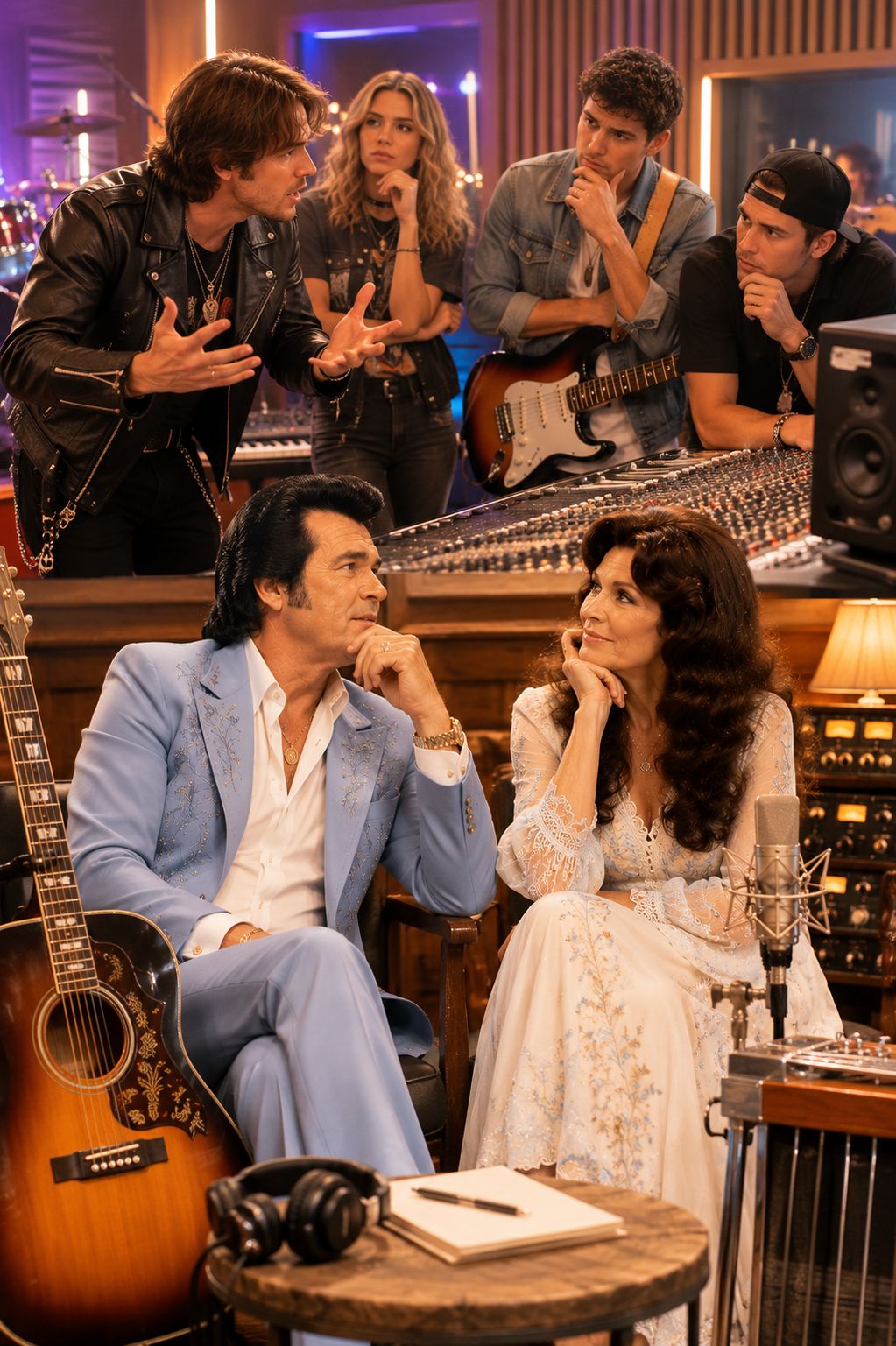
Yet as the music industry entered a new era, a younger generation of producers, executives, and performers began pushing for change. They believed country music needed modernization. They wanted bigger sounds, slicker arrangements, and a style that could compete with mainstream pop.
And in the middle of that cultural shift stood Conway and Loretta—the guardians of a traditional acoustic sound that many feared was disappearing.
The clash that followed became one of country music’s most fascinating generational stories.
When Simplicity Ruled Country Music
During the peak years of Conway and Loretta’s partnership, their recordings thrived on simplicity.
Hits like Louisiana Woman, Mississippi Man, After the Fire Is Gone, and As Soon As I Hang Up the Phone didn’t require elaborate studio tricks.
The magic came from chemistry.
Listeners felt like they were eavesdropping on real conversations between two people who understood every joy and pain of rural America.
Producers of the era knew that adding too much would only distract from the storytelling.
An acoustic guitar, subtle rhythm section, steel guitar, and two unforgettable voices were often enough.
That approach helped define an entire generation of country music.
But by the late 1970s and into the 1980s, the industry was changing rapidly.
A New Generation Arrives
The younger wave of musicians grew up hearing rock bands dominate radio.
They admired larger productions.
They wanted fuller drum sounds.
They experimented with electric keyboards, synthesizers, and crossover influences.
To them, traditional acoustic country sometimes sounded old-fashioned.
Record labels increasingly viewed modernization as a necessity rather than a choice.
Executives worried that younger listeners would abandon country music if it failed to evolve.
Suddenly, artists who had built careers on authenticity found themselves facing pressure to adapt.
Conway and Loretta were not immune.
The industry that once celebrated their stripped-down sound now wondered whether it could survive in a rapidly changing marketplace.
“The question wasn’t whether Conway and Loretta could sing. The question was whether traditional country could still compete.”
That uncertainty reflected a broader identity crisis within country music itself.
The Pressure to Modernize
Behind studio doors, conversations became more frequent.
Should arrangements become bigger?
Should acoustic instruments be pushed into the background?
Would younger audiences respond better to contemporary production?
Many producers believed the answer was yes.
The philosophy seemed logical.
If pop music was becoming more polished and sophisticated, country music needed to keep pace.
The result was an increasing number of recordings featuring layered instrumentation, stronger percussion, and production techniques that would have seemed unusual only a decade earlier.
For artists like Conway and Loretta, however, the challenge wasn’t technical.
It was emotional.
Their sound wasn’t merely a style.
It was part of their identity.
Every acoustic guitar carried the spirit of the communities they represented.
Every traditional arrangement reflected the culture that had made them stars.
Changing that formula risked losing something far more valuable than radio play.
It risked losing authenticity.
Fans Were Divided
Perhaps the most fascinating aspect of this transition was the reaction from fans.
Some embraced modernization.
They enjoyed hearing country music become bigger and more contemporary.
Others viewed the changes as a betrayal.
Many longtime listeners feared the genre was abandoning the very qualities that made it special.
They didn’t want country music to sound like pop music.
They wanted honesty.
They wanted stories.
They wanted the emotional intimacy that Conway and Loretta delivered better than almost anyone.
Concert audiences often revealed this divide.
Newer listeners appreciated experimentation.
Traditional fans responded most strongly when Conway and Loretta returned to their roots.
The applause often became loudest when the production faded away and the songs spoke for themselves.
“Technology could amplify a performance, but it couldn’t manufacture soul.”
That truth remained at the heart of their appeal.
Conway’s Quiet Resistance
Conway Twitty possessed one of the most recognizable voices in music.
He understood trends.
He understood business.
But he also understood what made his audience connect with him.
While he adapted when necessary, Conway rarely abandoned the emotional core of his music.
Even when productions grew larger, his voice remained grounded in storytelling.
He sang as though he were speaking directly to one person.
That ability became his greatest defense against changing fashions.
No matter how modern an arrangement became, listeners still heard Conway.
And that mattered.
Because authenticity cannot be engineered.
It has to be felt.
Loretta’s Unshakable Connection to Tradition
Loretta Lynn’s relationship with traditional country music ran even deeper.
Her songs emerged directly from personal experience.
She sang about working-class families, marriage struggles, motherhood, and social expectations long before those subjects became fashionable.
Her authenticity wasn’t created in a studio.
It came from life itself.
As younger industry voices pushed country music toward new directions, Loretta remained connected to the values that had shaped her career.
Fans trusted her because she never sounded manufactured.
Even when production trends shifted around her, the heart of her music stayed remarkably consistent.
That consistency became a source of comfort for audiences navigating a rapidly changing world.
The Battle Was Never Really About Instruments
Looking back, it becomes clear that the debate wasn’t truly about acoustic guitars versus electric instruments.
It was about identity.
Country music has always evolved.
Every generation introduces new sounds.
Every era challenges traditions.
The real question was whether innovation could coexist with authenticity.
Conway and Loretta demonstrated that it could.
They didn’t completely reject change.
Nor did they blindly follow every trend.
Instead, they found a balance.
They adapted where necessary while protecting the emotional honesty that defined their music.
That balancing act may be one of their greatest achievements.
The Legacy That Won
Ironically, time delivered the ultimate verdict.
Many production trends that once seemed revolutionary eventually faded.
Styles changed.
Technology evolved.
Musical fashions came and went.
Yet the classic recordings of Conway and Loretta endured.
Today, younger artists still study those performances.
They still admire the vocal chemistry.
They still recognize the power of simple arrangements built around authentic storytelling.
In many ways, modern country music has come full circle.
A new generation increasingly values acoustic instruments, emotional sincerity, and organic production.
The very qualities some once considered outdated have become desirable again.
That’s because authenticity never truly goes out of style.
“The future may change the sound of country music, but its soul will always belong to storytellers.”
Conway Twitty and Loretta Lynn understood that truth better than anyone.
The younger generation may have tried to reshape their traditional acoustic world.
Producers may have pushed for bigger sounds and newer directions.
The industry may have believed modernization was inevitable.
But in the end, the enduring power of Conway and Loretta’s music proved something remarkable.
Technology can change arrangements.
Trends can change radio playlists.
Generations can change expectations.
Yet a heartfelt song, delivered with honesty and conviction, remains timeless.
And that is why the acoustic spirit of Conway and Loretta continues to resonate decades later—not as a relic of the past, but as a reminder of what country music sounds like when it speaks directly to the human heart.
Video