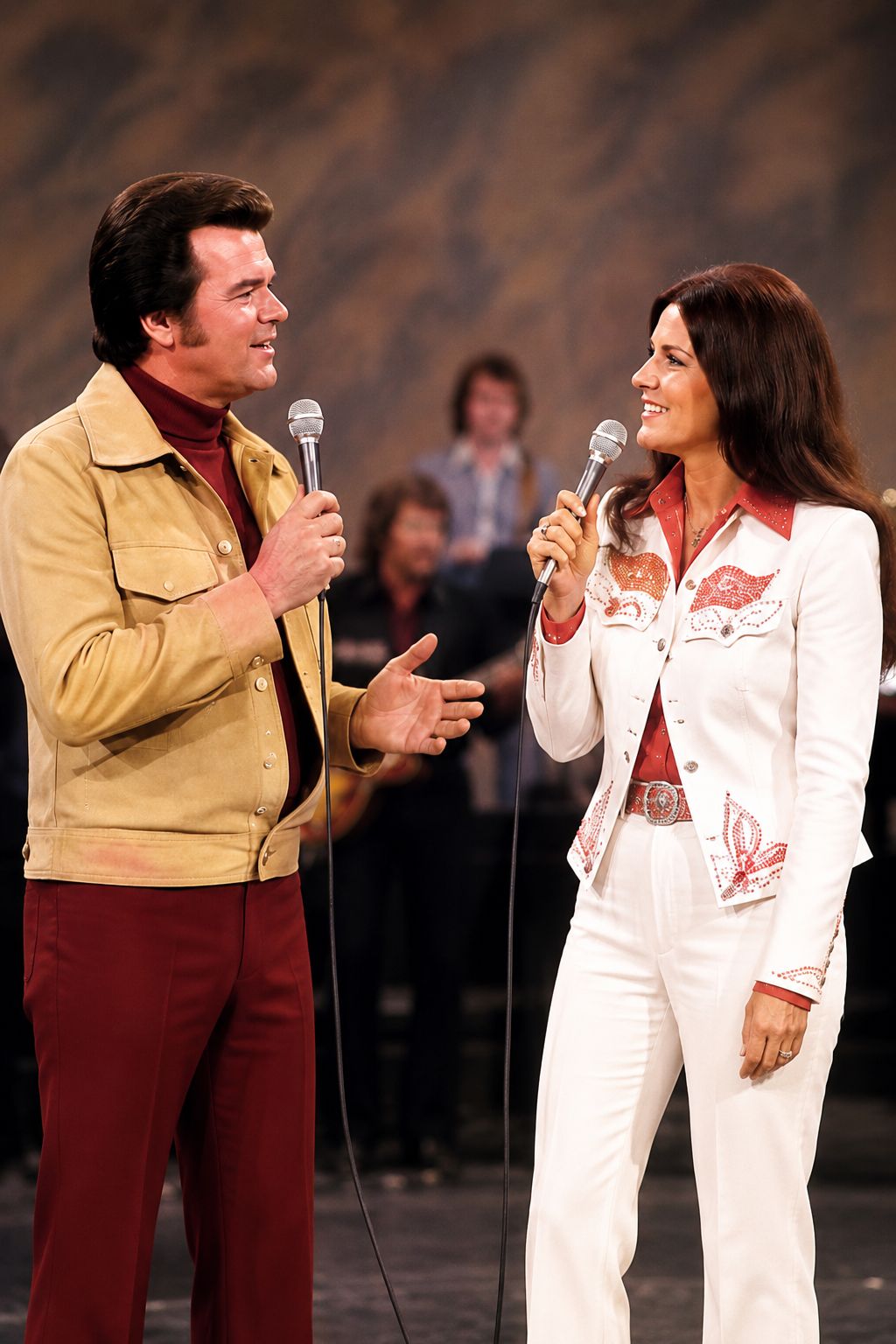
Introduction
Country music has always thrived on storytelling. Yet few partnerships in the history of American music transformed storytelling as dramatically as the legendary pairing of Conway Twitty and Loretta Lynn. Their voices didn’t simply harmonize; they collided, challenged, teased, argued, and ultimately redefined what a duet could be.
At a time when Hollywood and Nashville followed rigid formulas about romance, gender roles, and musical structure, Conway and Loretta shattered expectations. Their duet format became a revolutionary blueprint that ignored nearly every conventional rule of entertainment.
And that is precisely why audiences couldn’t look away.
A Time When Duets Were Predictable
During the late 1960s and throughout the 1970s, most mainstream duet performances followed a familiar pattern.
The man sang a verse.
The woman answered.
They joined together for a polished chorus.
The conflict was resolved.
The audience smiled.
Curtain closed.
Hollywood loved tidy endings. Radio programmers loved simplicity. Record executives loved formulas.
Conway Twitty and Loretta Lynn had other plans.
Instead of presenting idealized romance, they brought real relationships into the recording booth. Their songs often sounded less like performances and more like private conversations accidentally captured by microphones.
The chemistry was electric because it felt authentic.
Listeners weren’t hearing characters.
They were hearing people.
“We weren’t trying to sound perfect. We were trying to sound real.”
That authenticity became their greatest weapon.
The Genius of Musical Tension
One of the most revolutionary aspects of the Conway-Loretta structure was their willingness to leave emotional tension unresolved.
Hollywood stories typically relied on clean resolutions. Every disagreement led to reconciliation. Every conflict ended neatly.
Conway and Loretta often did the opposite.
Songs such as “You’re the Reason Our Kids Are Ugly” became iconic precisely because neither side completely won the argument.
The humor emerged from conflict rather than resolution.
Audiences suddenly found themselves laughing at situations they recognized from their own marriages, families, and relationships.
Instead of fantasy, Conway and Loretta delivered reality.
And reality was messy.
Their duet structure created an unusual dramatic device: both singers became protagonists simultaneously.
There was no hero.
There was no villain.
Only two perspectives.
That concept seems common today, but at the time it was groundbreaking.
They Turned Country Songs Into Miniature Movies
What made their performances extraordinary was how cinematic they felt.
Most country songs told stories.
Conway and Loretta acted them out.
Every line became dialogue.
Every pause carried meaning.
Every vocal inflection added another layer of character.
Listeners could practically visualize scenes unfolding before them.
Conway’s smooth, confident delivery often represented charm, pride, or stubbornness.
Loretta’s sharp, fearless responses carried wit, intelligence, and emotional honesty.
Together, they created dramatic tension that resembled a screenplay more than a traditional song.
Ironically, this approach broke many of the storytelling conventions Hollywood itself depended upon.
Instead of presenting glamorous fictional characters, they embraced ordinary people with flaws.
That decision made their songs far more relatable than many films of the era.
“The audience wasn’t watching stars. They were seeing themselves.”
The Power of Imperfection
Perhaps the most radical rule they broke involved perfection itself.
The entertainment industry often demanded flawless performances.
Perfect appearances.
Perfect romances.
Perfect endings.
Conway and Loretta understood something deeper.
Perfection is boring.
Their recordings felt alive because they contained spontaneity.
Sometimes their voices overlapped unexpectedly.
Sometimes they laughed.
Sometimes one seemed to challenge the other directly.
Those moments created an illusion that anything could happen.
Audiences sensed genuine interaction rather than rehearsed choreography.
That unpredictability became addictive.
Fans returned again and again because every performance felt human.
Not manufactured.
Human.
The Battle of Equals
Another Hollywood convention they demolished involved gender dynamics.
Throughout much of entertainment history, female performers in duet settings often occupied supporting roles.
Loretta Lynn refused.
And Conway welcomed the challenge.
Rather than allowing one voice to dominate, they built songs around equality.
Loretta wasn’t simply responding to Conway.
She was confronting him.
Questioning him.
Outsmarting him.
Matching him line for line.
This balance created dramatic excitement rarely heard in mainstream music.
Their duets became verbal sparring matches where both performers held equal power.
For audiences, especially women, that dynamic felt refreshing.
Loretta wasn’t waiting to be rescued.
She was delivering some of the sharpest lines in country music history.
The structure transformed the duet itself into a battlefield of ideas.
And fans loved every second of it.
Why Their Humor Changed Everything
Humor had existed in country music long before Conway and Loretta.
But their approach was different.
Most comedy songs relied on punchlines.
Conway and Loretta relied on character.
The jokes worked because listeners believed the people singing them.
Every sarcastic remark felt authentic.
Every playful insult felt earned.
Their humor emerged naturally from relationship dynamics.
This was revolutionary because Hollywood often separated comedy from emotional depth.
Conway and Loretta combined both.
A listener could laugh during one verse and feel genuine heartbreak during the next.
That emotional complexity made their music unforgettable.
“The funniest moments often revealed the deepest truths.”
Creating Emotional Risk
Great art requires risk.
Conway and Loretta took enormous risks every time they stepped into a studio together.
Many industry executives worried audiences wouldn’t embrace songs centered around marital disputes, jealousy, frustration, and real-world complications.
Yet those concerns underestimated listeners.
People recognized themselves in these stories.
The emotional risks created emotional rewards.
When Conway sounded vulnerable, audiences leaned closer.
When Loretta delivered a devastating line with absolute confidence, audiences cheered.
The duet structure constantly placed both performers in emotionally exposed positions.
That vulnerability became the foundation of their success.
The Influence Still Echoes Today
Modern country music owes a tremendous debt to Conway Twitty and Loretta Lynn.
Many contemporary duet formats trace directly back to the framework they popularized.
Today’s artists frequently use dual perspectives.
They embrace unresolved tension.
They explore relationship conflicts.
They allow both voices equal narrative power.
These concepts feel normal now because Conway and Loretta proved they worked.
What once seemed rebellious has become standard practice.
That is the mark of true innovation.
The greatest pioneers don’t simply create something new.
They change expectations forever.
The Secret Behind Their Magic
Many musicians have attempted to recreate the Conway-Loretta formula.
Few have succeeded.
Why?
Because the structure itself was only part of the equation.
The real magic came from trust.
Conway trusted Loretta enough to let her challenge him.
Loretta trusted Conway enough to share the spotlight.
Neither performer appeared threatened by the other’s strengths.
Instead, they amplified those strengths.
Their greatest moments emerged from mutual respect.
The audience could feel it.
Beneath every joke, every argument, every clever exchange existed genuine admiration.
That emotional foundation made the revolutionary structure work.
Without trust, the formula collapses.
With trust, it becomes timeless.
A Legacy That Refuses to Fade
Decades after their peak, Conway Twitty and Loretta Lynn remain one of country music’s most beloved partnerships.
Their recordings continue to resonate because they captured something universal.
Relationships are complicated.
Love is messy.
People disagree.
People laugh.
People hurt.
People forgive.
Hollywood often tried to simplify those truths.
Conway and Loretta embraced them.
By rejecting predictable formulas, they created a duet structure that felt startlingly honest. They transformed country songs into conversations, conversations into drama, and drama into unforgettable art.
The revolutionary aspect wasn’t merely musical.
It was emotional.
They gave audiences permission to see imperfect relationships as worthy of celebration.
And in doing so, Conway Twitty and Loretta Lynn broke every Hollywood rule that mattered.
The remarkable part?
The rules never recovered.
Their music won.
Video