Introduction
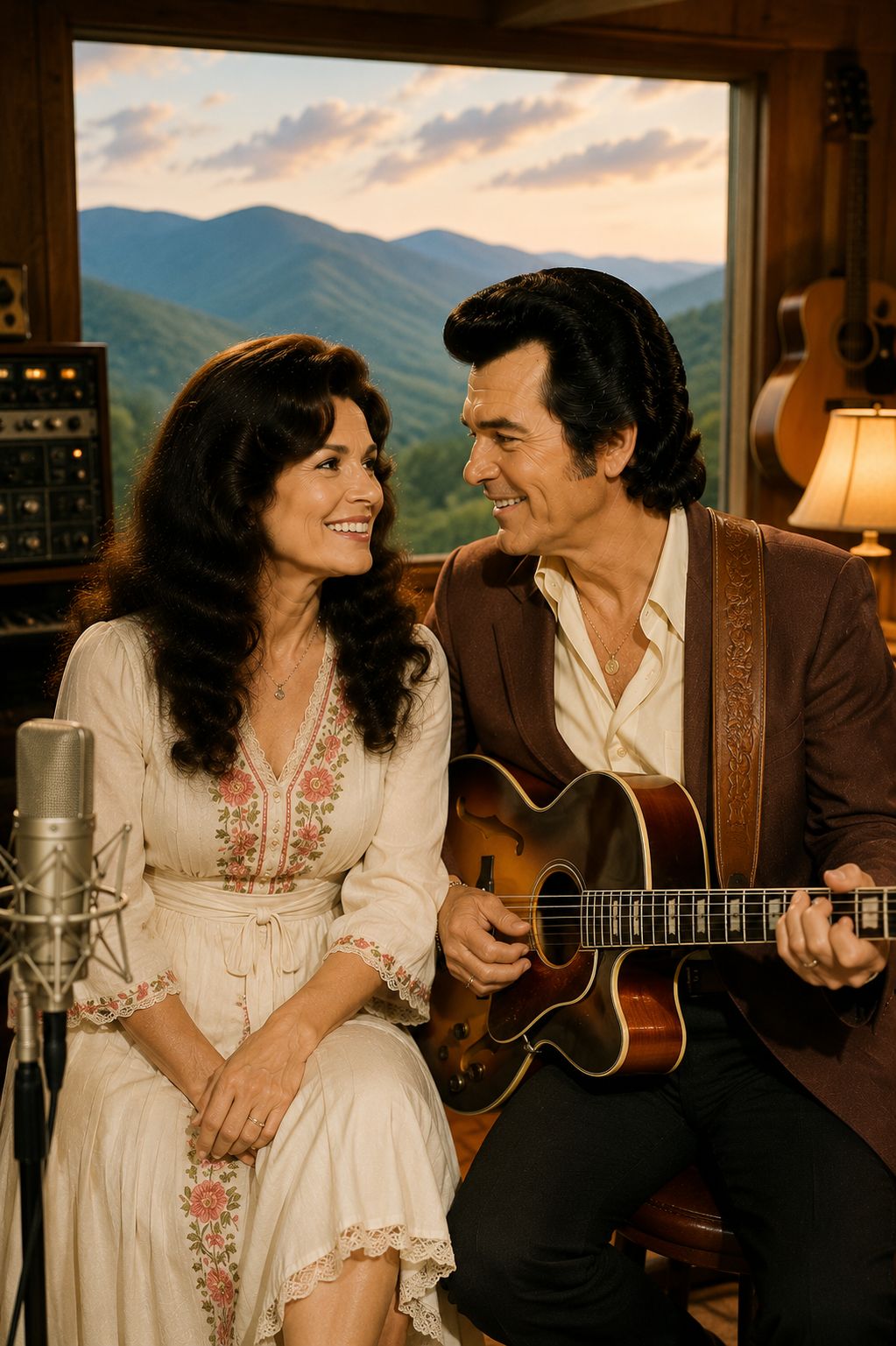
Country music history is filled with unlikely partnerships, but few were as powerful—or as transformative—as the bond between Conway Twitty and Loretta Lynn.
On the surface, they seemed to come from different worlds.
Conway was the smooth-talking rockabilly rebel. Before he became one of country music’s most beloved voices, he was a pompadour-wearing heartthrob who chased rock-and-roll dreams. His early hit “It’s Only Make Believe” made him a crossover sensation and gave him the swagger of a man who could charm any audience.
Loretta Lynn, meanwhile, was a mountain girl from the coal-mining hills of Kentucky. She carried the grit of Appalachia in her voice and the honesty of rural America in every lyric she sang. Her songs weren’t polished fantasies; they were real stories about marriage, motherhood, hardship, and survival.
Nobody could have predicted that these two artists would eventually create one of the most iconic duos in country music history.
Yet it was that contrast—the rebel and the mountain girl—that changed everything.
And according to many who witnessed their rise, Loretta Lynn may have transformed Conway Twitty more than anyone realizes.
Before Loretta, Conway Was Searching
By the late 1960s, Conway Twitty was already successful.
But success and identity aren’t always the same thing.
Conway had spent years navigating the blurry line between rock and country. He had chart hits, loyal fans, and a reputation as a magnetic performer, but he was still searching for the artistic voice that would define his legacy.
He knew how to sing.
He knew how to perform.
What he hadn’t yet found was the perfect musical counterpart.
Then Loretta Lynn entered the picture.
The idea of pairing them wasn’t immediately obvious.
They weren’t romantic partners.
They weren’t childhood friends.
They weren’t cut from the same cloth.
But sometimes the greatest chemistry comes from opposites.
When they first worked together, something unexpected happened.
The polished showman met the fearless storyteller.
The rebel met the mountain girl.
And sparks flew—not romantic sparks, but creative ones.
“They sounded like they had been singing together their entire lives.”
That became a common reaction among fans and industry insiders alike.
The Secret Ingredient Was Authenticity
Many duet acts succeed because their voices blend beautifully.
Conway and Loretta succeeded because they sounded believable.
Every argument in a song felt real.
Every flirtation felt genuine.
Every heartbreak felt personal.
Listeners didn’t hear two stars performing.
They heard two people living the story.
Loretta brought something Conway desperately needed: authenticity that couldn’t be manufactured.
She wasn’t interested in pretending.
She sang exactly what she believed.
She spoke exactly what she thought.
And that honesty pushed Conway into a new artistic space.
The rockabilly performer who once relied heavily on style began leaning more deeply into emotional truth.
The result was magic.
Songs like “After the Fire Is Gone,” “Lead Me On,” and “Louisiana Woman, Mississippi Man” became more than hits.
They became conversations.
Loretta Challenged Conway
One reason their partnership flourished was that Loretta wasn’t intimidated by Conway’s star power.
Many artists might have deferred to him.
Loretta didn’t.
She challenged him.
She teased him.
She pushed back.
And Conway loved it.
Their playful relationship created a dynamic that audiences couldn’t get enough of.
Behind the scenes, they often exchanged jokes and friendly jabs.
Onstage, that chemistry translated into performances that felt spontaneous and alive.
Loretta never tried to become more like Conway.
Instead, she remained unapologetically herself.
Ironically, that encouraged Conway to become more himself as well.
“The best partnerships don’t erase differences. They celebrate them.”
That truth defined Conway and Loretta.
Their differences became their greatest strength.
Redefining the Sound of Country Duets
Before Conway and Loretta, country duets often followed familiar formulas.
Male singer.
Female singer.
Simple harmony.
Predictable storytelling.
Conway and Loretta shattered those expectations.
Their records felt cinematic.
Listeners could visualize entire relationships unfolding in three-minute songs.
There was tension.
Humor.
Romance.
Frustration.
Passion.
Their voices didn’t merely blend—they interacted.
The songs felt like living dialogue.
This approach influenced countless artists who followed.
Suddenly, country duets weren’t just about singing together.
They were about acting through music.
Telling stories.
Creating believable characters.
Conway and Loretta turned country duets into emotional theater.
The Mountain Girl’s Influence
Loretta’s influence on Conway extended beyond the recording studio.
She represented a different philosophy of music.
While Nashville increasingly embraced polish and commercial appeal, Loretta remained rooted in truth.
She sang about working-class struggles.
Family problems.
Women’s perspectives.
Real life.
Conway admired that courage.
Many observers noticed that his performances became increasingly emotionally vulnerable during the years they worked together.
His voice seemed deeper.
Richer.
More expressive.
The confidence remained, but there was new depth beneath it.
The mountain girl’s influence was impossible to ignore.
She reminded Conway that audiences connect most strongly with honesty.
Not perfection.
Honesty.
That lesson helped shape some of the most memorable recordings of his career.
Why Fans Believed Every Word
Part of the duo’s enduring appeal comes from the fact that audiences sensed genuine affection between them.
Not romantic love.
Respect.
Friendship.
Trust.
Those qualities can’t be faked.
When Conway looked at Loretta during a performance, viewers saw admiration.
When Loretta laughed at Conway’s jokes, audiences saw authenticity.
That emotional foundation made every song more powerful.
Fans weren’t simply listening to music.
They were witnessing a relationship.
A partnership.
A connection built on years of mutual respect.
“People believed them because they believed each other.”
That’s the simplest explanation for their success.
And perhaps the most accurate.
A Legacy That Still Echoes Today
Decades later, Conway Twitty and Loretta Lynn remain the gold standard for country duets.
New artists still study their recordings.
Fans still discover their performances online.
Their songs continue to resonate because the emotions inside them remain timeless.
But one aspect of their story deserves more attention.
The transformation.
The way a mountain girl from Kentucky helped reshape a rockabilly rebel from Mississippi.
The way Loretta’s authenticity influenced Conway’s artistry.
The way their differences created something neither could have achieved alone.
History often remembers the hits.
The awards.
The chart positions.
Yet the deeper story is about influence.
Growth.
Connection.
Conway Twitty entered the partnership as an established star.
He emerged as something more.
A more emotionally complete artist.
A more compelling storyteller.
A performer capable of revealing vulnerability alongside confidence.
And Loretta Lynn played a major role in that evolution.
The Beautiful Contradiction
Perhaps that’s why their music still feels alive.
Conway represented sophistication.
Loretta represented simplicity.
Conway carried the polish of a seasoned entertainer.
Loretta carried the raw truth of mountain life.
Together, they created a beautiful contradiction.
A sound built on opposites.
A partnership built on differences.
A legacy built on authenticity.
The rockabilly rebel never lost his charm.
The mountain girl never lost her roots.
But together, they created something larger than either identity alone.
They redefined what a country duet could be.
And in doing so, they gave country music one of its most unforgettable partnerships—a partnership where a mountain girl quietly changed a rebel forever.
Video