Introduction
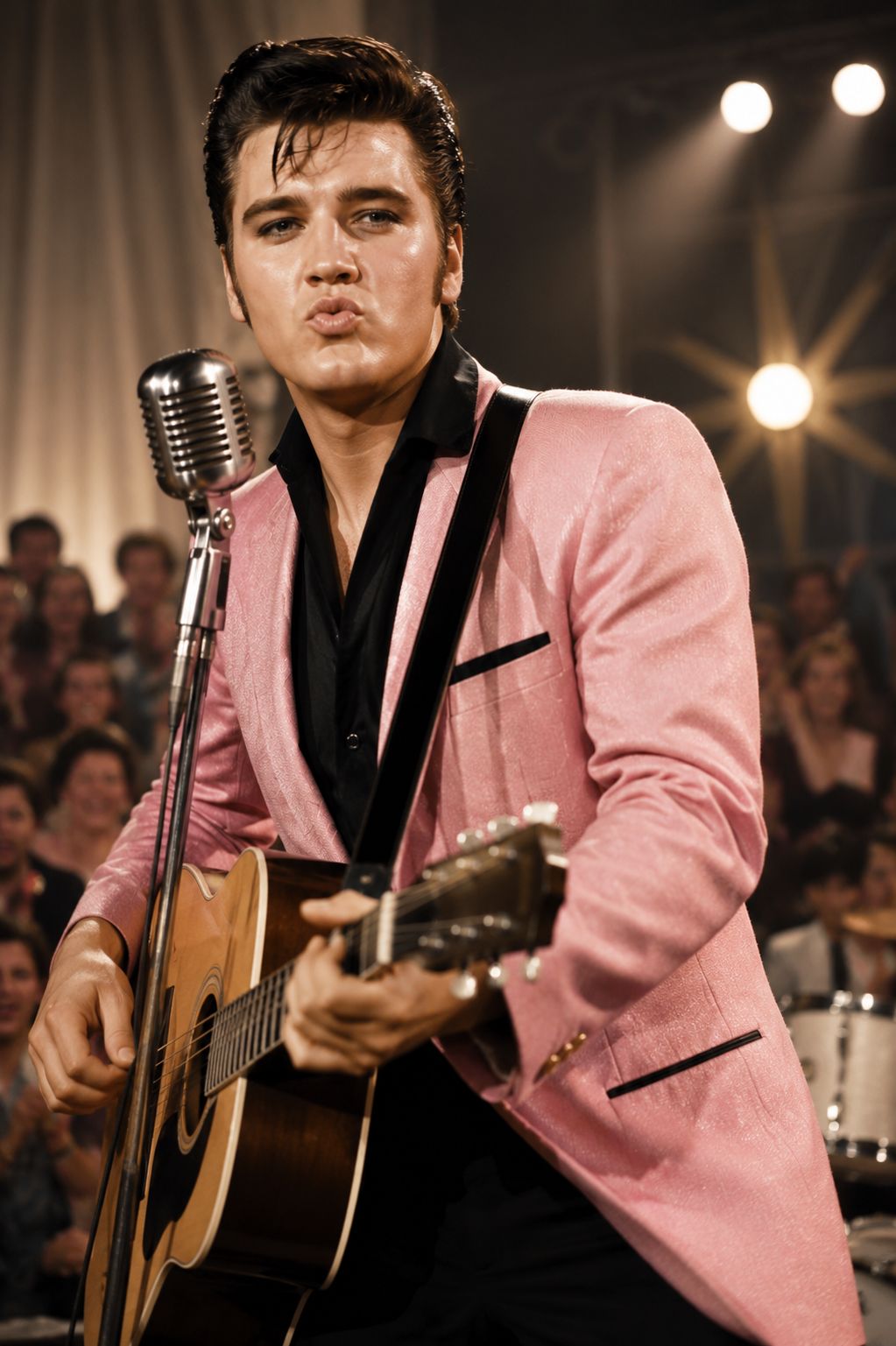
When Elvis Presley first stepped onto a stage with that slicked-back hair, trembling voice, and dangerous swagger, America wasn’t ready for what was coming.
The country thought it understood music.
Then one song changed everything.
Not just the charts.
Not just radio.
But culture itself.
The song was “Heartbreak Hotel.”
And the moment it hit the airwaves in 1956, it felt like lightning had struck the American South and set the entire nation on fire.
How Elvis Presley Shocked America With One Song
Before the screaming fans… before the Hollywood movies… before the white jumpsuits and global fame… Elvis Presley was just a nervous young truck driver from Memphis trying to find a sound that belonged to him.
America in the early 1950s was rigid.
Music had rules.
Country stayed country.
Blues stayed blues.
Gospel belonged in church.
And “respectable” performers were expected to stand still, smile politely, and sing clean-cut melodies for family audiences.
Then Elvis arrived like a storm nobody could control.
He wasn’t polished.
He wasn’t safe.
And he definitely wasn’t traditional.
But it wasn’t until “Heartbreak Hotel” exploded across radios that America truly realized something terrifying:
The old world was losing control of its youth.
The Song That Sounded Haunted
“Heartbreak Hotel” didn’t sound like anything else on the radio.
It was dark.
Lonely.
Almost ghostly.
The opening line alone felt unsettling:
“Well, since my baby left me…”
There was pain in Elvis’ voice that listeners could feel. Not performative sadness. Real ache. Real hunger. Real desperation.
Teenagers heard freedom.
Parents heard rebellion.
Radio stations heard dollar signs.
The song carried a strange emotional weight because Elvis blended musical worlds America had tried to keep separated. He fused Black rhythm and blues with white country music, gospel emotion, and raw Southern soul.
That combination changed popular music forever.
Suddenly, young listeners weren’t interested in polished crooners anymore. They wanted intensity. They wanted movement. They wanted emotion that felt alive.
And Elvis delivered it with every shaking knee and every dangerous grin.
America Was Fascinated — And Horrified
The first time millions of Americans saw Elvis perform “Heartbreak Hotel” on television, reactions were explosive.
Adults called him vulgar.
Church leaders condemned him.
Critics mocked his movements.
Some newspapers described his performances as “animalistic.”
Others claimed he was corrupting teenagers.
But the louder the outrage became, the bigger Elvis grew.
Because teenagers finally saw someone who looked like their emotions felt.
He wasn’t perfect.
He was restless.
Electric.
Wild.
Emotional.
In a country still recovering from war and trying desperately to preserve old social norms, Elvis represented something dangerous:
Change.
He didn’t just sing the song.
He unleashed something America had been trying to suppress.
Girls screamed at concerts in ways never seen before. Crowds lost control. Parents panicked watching their children obsess over this young man from Mississippi.
It wasn’t only about music anymore.
It was about identity.
The Birth of Modern Celebrity
Today, viral fame happens overnight. But in 1956, Elvis becoming a national obsession felt almost supernatural.
People couldn’t look away.
Every performance created headlines. Every television appearance triggered controversy.
When Elvis appeared on The Ed Sullivan Show, over 60 million people tuned in — an unimaginable number at the time.
Television executives even tried filming him only from the waist up because his dancing was considered too provocative for American audiences.
Imagine that.
A singer moving his hips became national scandal material.
But that scandal only fueled the legend.
Young Americans weren’t merely listening to Elvis. They were choosing sides.
Were you with the old world?
Or the new one Elvis represented?
Why “Heartbreak Hotel” Hit So Hard
Part of what made the song revolutionary was its emotional honesty.
Most hit songs of that era felt polished and cheerful.
“Heartbreak Hotel” felt lonely.
There was darkness inside it.
That sadness connected deeply with postwar teenagers who felt trapped between strict expectations and growing desires for freedom.
Elvis didn’t sound like a distant star.
He sounded human.
Broken, even.
And ironically, that vulnerability made him magnetic.
“Heartbreak Hotel” gave loneliness a rhythm people could dance to.
That had never really happened before on such a massive scale.
The record sold over a million copies and became Elvis’ first true national smash hit. But statistics alone can’t explain its impact.
The song created emotional permission.
Permission to feel too much.
Permission to be loud.
Permission to rebel.
And once young America tasted that freedom, there was no going backward.
The Cultural Earthquake Nobody Could Stop
Looking back now, it’s easy to underestimate how shocking Elvis truly was.
Modern audiences see a legend.
1950s America saw a threat.
He blurred racial boundaries in music during one of the most divided eras in American history. He borrowed heavily from Black musical traditions and introduced many white audiences to sounds they had rarely embraced before.
That alone transformed the music industry.
Without Elvis, there’s arguably no modern rock star blueprint.
No The Beatles phenomenon.
No Mick Jagger swagger.
No Prince sexuality.
No Michael Jackson performance revolution.
He cracked the door open for all of them.
And it started with one haunting song that made America uncomfortable.
Behind the Fame Was a Lonely Young Man
Ironically, the emotions inside “Heartbreak Hotel” mirrored Elvis himself more than fans realized.
Fame came fast.
Too fast.
Within months, he went from unknown Southern kid to the most talked-about entertainer in America.
But global obsession came with isolation.
Every move became public.
Every mistake became headline news.
Every performance carried impossible expectations.
The world saw confidence.
But underneath the fame was still a shy young man who loved gospel music, missed home, and often felt overwhelmed by the chaos surrounding him.
That emotional contradiction became part of Elvis’ power.
He looked untouchable.
Yet he always sounded heartbreakingly human.
Why The Story Still Matters Today
Nearly seventy years later, “Heartbreak Hotel” still echoes through music history because it represents more than a hit record.
It represents the moment culture shifted.
The moment young people realized they could define themselves differently from their parents.
The moment emotion became more important than perfection.
The moment music stopped being polite background noise and became identity, rebellion, and raw feeling.
That’s why Elvis Presley remains immortal.
Not because he was flawless.
But because he made people feel alive.
One song didn’t just make Elvis famous.
It changed America forever.
And somewhere inside that eerie echo of “Heartbreak Hotel,” you can still hear the exact moment the old world started to disappear.