Introduction
There are country legends… and then there is Willie Nelson.
The braided outlaw with the weathered voice didn’t just sing about heartbreak, freedom, and rebellion — he lived every painful, chaotic, beautiful word of it. Behind the smiles, bandanas, and iconic guitar named “Trigger” lies a life so wild, tragic, and unpredictable that even Hollywood would struggle to make it believable.
Because Willie Nelson wasn’t built for ordinary life.
He was built for survival.
Abandoned Before He Even Had a Chance
Willie Hugh Nelson was born during the Great Depression in Abbott, Texas — a tiny farming town where dreams died faster than crops in a drought.
Before Willie was even old enough to understand love, both of his parents walked away.
His mother left first.
Then his father disappeared too.
Willie and his sister Bobbie were raised by their grandparents, struggling through poverty while the rest of America barely noticed families like theirs existed.
“We were poor,” Willie once admitted. “But everybody around us was poor too.”
That kind of childhood leaves scars no fame can erase.
And maybe that’s why Willie always sounded different when he sang about loneliness. He wasn’t performing heartbreak.
He remembered it.
The Boy Who Found Salvation in Music
Willie’s grandparents introduced him to gospel music at church, and by age six, he already had a guitar in his hands.
Music became more than a hobby.
It became survival.
While other kids dreamed of escaping Texas, Willie was already writing songs filled with pain far beyond his years.
By his teens, he was playing bars, dance halls, and honky-tonks — places filled with broken men, cigarette smoke, and stories that would later fuel his songwriting genius.
But nobody looking at skinny young Willie Nelson would have guessed he’d one day become one of the most influential figures in country music history.
At the time?
He was just another struggling musician trying not to drown.
Nashville Didn’t Want Him
This is the part most fans don’t know.
When Willie first arrived in Nashville, the industry practically rejected him.
Executives hated his voice.
They hated his phrasing.
They hated that he didn’t sound polished.
Country radio wanted clean-cut stars in matching suits.
Willie Nelson looked and sounded like a drifter who wandered in from the highway.
But while Nashville doubted him, something else happened:
Other artists started recording his songs.
And suddenly, Willie became one of the greatest songwriters in America.
He wrote classics like:
- “Crazy” for Patsy Cline
- “Night Life”
- “Funny How Time Slips Away”
Ironically, the same industry that rejected Willie’s voice became rich off his words.
Still, success didn’t fix the emptiness.
And Willie’s life soon spiraled into chaos.
The Outlaw Years Changed Country Music Forever
In the 1970s, Willie Nelson did something nobody thought possible.
He stopped trying to fit Nashville.
Instead, he burned the rules down.
Literally and figuratively.
Willie moved back to Texas, grew his hair long, wore bandanas instead of cowboy hats, and embraced a rebellious sound blending country, rock, folk, blues, and raw honesty.
The result?
The birth of outlaw country.
Alongside Waylon Jennings, Willie became the face of a movement that challenged the polished machine of Nashville.
Suddenly, country music felt dangerous again.
Real again.
Albums like Red Headed Stranger transformed Willie from struggling songwriter into a cultural icon.
But fame came with a cost.
And Willie Nelson’s personal life became almost as legendary as his music.
Drugs, Debt, and Destruction
The outlaw image wasn’t fake.
Willie lived hard.
Very hard.
Marijuana became a massive part of his identity, and while fans laughed about it, there were darker realities behind the jokes. Willie faced arrests, financial disasters, failed relationships, and years of emotional exhaustion hidden beneath his laid-back smile.
Then came the moment that nearly destroyed him forever.
The IRS claimed Willie owed over $16 million in unpaid taxes.
It became one of the most infamous financial collapses in music history.
The government seized his property.
His homes.
His possessions.
Even his beloved belongings were auctioned off.
Most artists would’ve disappeared under that kind of humiliation.
Willie didn’t.
Instead, he fought back the only way he knew how:
Through music.
“There’s more old drunks than old doctors,” Willie joked during those brutal years.
Humor became armor.
And somehow, impossibly, he survived.
He released albums, toured relentlessly, and eventually paid off the crushing debt.
Not many people come back from losing everything.
Willie Nelson did.
His Guitar “Trigger” Has Seen More Than Most Humans
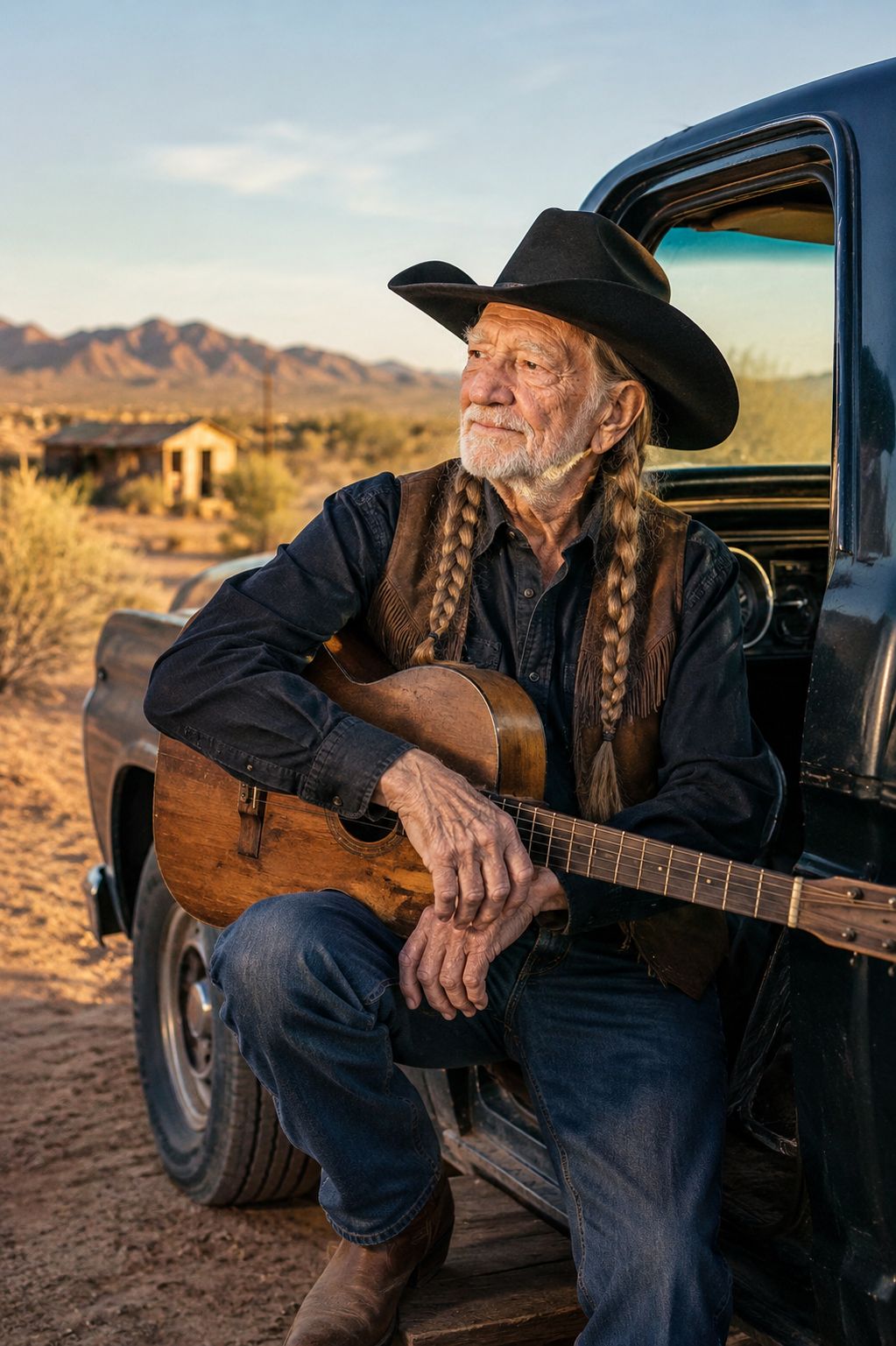
If Willie Nelson has a soulmate, it may actually be his battered acoustic guitar.
“Trigger” isn’t just an instrument.
It’s history.
The famous Martin guitar has a giant hole worn into the wood from decades of relentless playing. Willie refused to replace it, even as experts warned it might eventually fall apart.
Because to Willie, Trigger carries memories.
Every scar on that guitar tells a story:
- smoky bars,
- broken marriages,
- midnight highways,
- outlaw tours,
- and crowds screaming his name under neon lights.
“Me and Trigger have been through the same thing,” Willie once said.
And honestly?
That may be the most accurate description of Willie Nelson’s life ever spoken.
The Tragedy Most Fans Never Recovered From
For all the jokes and outlaw mythology, Willie’s life also carries devastating grief.
One of the deepest wounds came from the death of his son, Billy Nelson, who died by suicide in 1991.
Friends say Willie was never fully the same afterward.
No parent ever truly heals from that kind of loss.
And suddenly, many of Willie’s songs sounded even more haunting.
Because behind the rebel image was a man carrying unbearable pain.
That’s what made audiences connect with him so deeply.
Willie never pretended life was perfect.
He sang like someone who understood suffering firsthand.
Willie Nelson Became Bigger Than Country Music
At some point, Willie Nelson stopped being just a singer.
He became an American symbol.
Farm Aid. Activism. Anti-war movements. Marijuana legalization. Freedom. Rebellion. Survival.
He crossed generations in a way almost no artist ever has.
Young fans discovered him through collaborations with artists from every genre imaginable. Older fans saw him as the last true outlaw left standing.
And despite decades of excess, heartbreak, and hard living…
Willie kept going.
That alone feels almost impossible.
The Most Shocking Part of Willie Nelson’s Life?
It’s not the drugs.
It’s not the arrests.
It’s not the IRS disaster.
It’s not even the outlaw reputation.
The most shocking part is this:
After everything he survived, Willie Nelson never became bitter.
He remained funny.
Gentle.
Reflective.
Human.
That’s rare.
Most people carrying that much pain eventually harden.
Willie softened.
And maybe that’s why millions still love him.
Because when Willie Nelson sings, people don’t hear perfection.
They hear survival.
The Final Truth About Willie Nelson
The untamed life of Willie Nelson shocks people because it feels impossible that one man could endure so much chaos and still keep smiling.
Abandonment.
Poverty.
Rejection.
Addiction.
Financial ruin.
Personal tragedy.
Public scrutiny.
And yet somehow, through every storm, Willie Nelson kept making music that felt honest enough to heal strangers.
That’s why he became more than a country star.
He became proof that broken people can still create beautiful things.
And perhaps that’s the real reason Willie Nelson remains unforgettable.
Not because he lived wildly.
But because he survived wildly.
Video