1978 — Willie Nelson’s Outlaw Era Shocked Nashville Forever
In 1978, Nashville was still trying to control country music with polished suits, strict studio rules, and carefully manufactured stars. The industry had a formula — and it worked for decades. Singers showed up, recorded songs chosen by executives, smiled for the cameras, and stayed inside the lines.
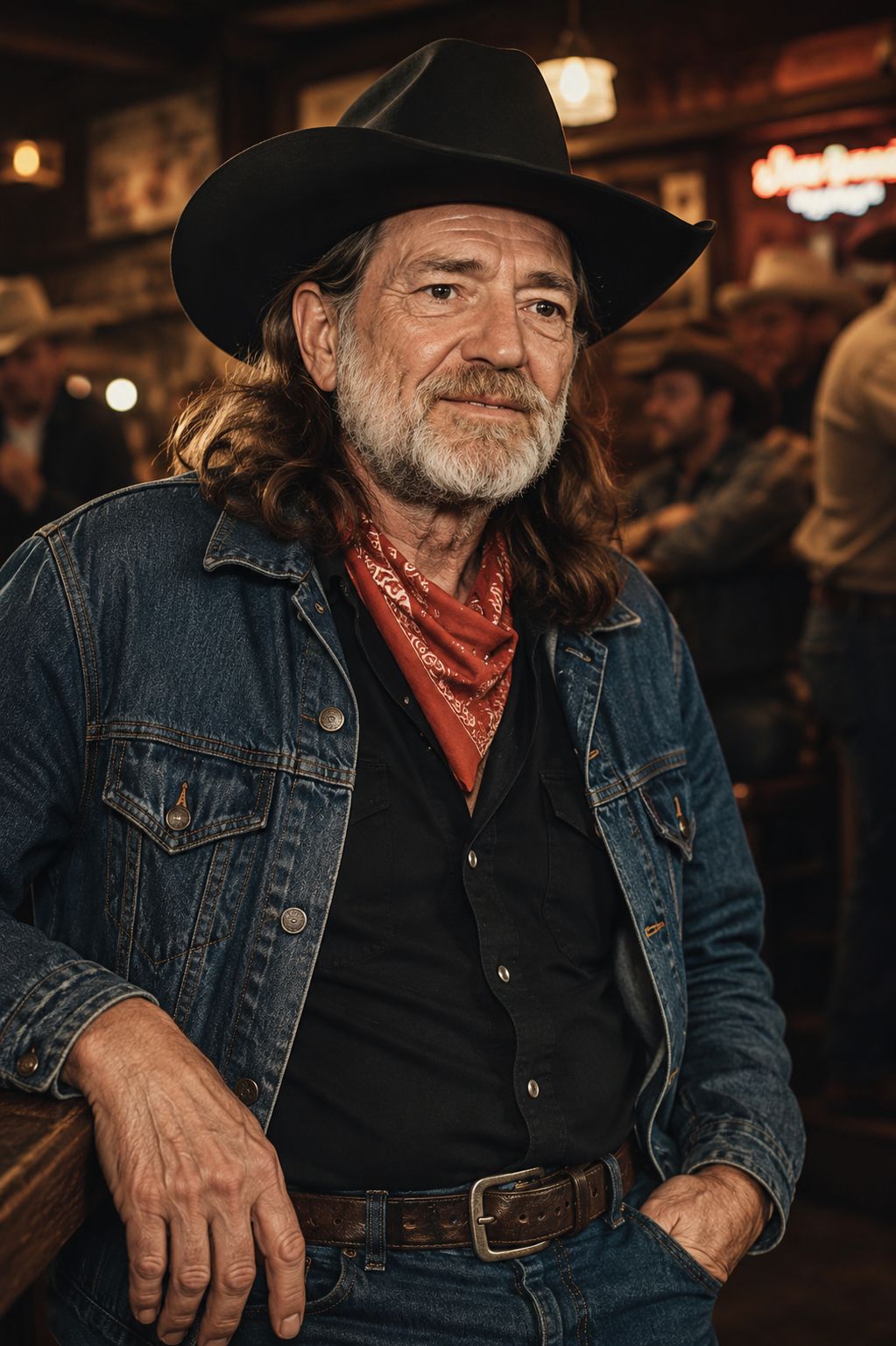
Then Willie Nelson walked in wearing braids, a bandana, faded jeans, and a beard that looked more suited for a drifter than a country superstar.
And somehow… America loved him even more for it.
By 1978, Willie Nelson was no longer just another country singer fighting for radio time. He had become the face of the Outlaw Movement — a cultural rebellion that shattered Nashville’s traditions and changed country music forever.
It wasn’t just about music.
It was about freedom.
And Nashville never recovered from the shock.
The strange thing about Willie Nelson’s rise is that nobody in the industry expected him to become a superstar at all.
Years earlier, executives dismissed him as “too different.” His voice was unconventional. His phrasing ignored traditional timing. His appearance didn’t fit the clean-cut image Nashville demanded in the 1960s and early 1970s.
He looked like a man who had wandered out of Texas after sleeping under the stars for three nights.
Because sometimes… he had.
But Willie understood something the industry didn’t.
People were tired of fake perfection.
While Nashville polished its stars into predictable products, Willie Nelson represented something raw and human. He sounded like heartbreak. He sounded like loneliness at 2 AM. He sounded like someone who had actually lived the lyrics he sang.
And fans felt that instantly.
By the late 1970s, the Outlaw Movement was exploding across America. Alongside artists like Waylon Jennings, Willie Nelson became the symbol of artistic rebellion against the Nashville machine.
The movement wasn’t officially organized. There were no rules or manifestos.
It was more like a collective refusal to be controlled.
The “outlaws” wanted creative freedom:
- Freedom to choose their own songs
- Freedom to produce their own records
- Freedom to look however they wanted
- Freedom to sound imperfect and real
And in 1978, that rebellion reached its peak.
Willie Nelson was suddenly everywhere.
Concert arenas sold out across the country. His albums dominated charts. Fans who normally ignored country music started paying attention. Rock audiences embraced him. Young listeners connected with his anti-establishment spirit.
He wasn’t merely crossing genres.
He was destroying the walls between them.
One of the most shocking parts of Willie’s success was how effortlessly he connected with ordinary people.
He didn’t act like a superstar.
He talked softly. He laughed easily. He seemed approachable in a way most celebrities never were.
Even on stage, there was something strangely intimate about him. Thousands of people could be watching, yet it still felt like Willie was singing directly to one lonely person in the back row.
That emotional honesty became his superpower.
“Willie Nelson didn’t sing songs. He lived inside them.”
Fans believed him because his life carried visible scars.
Years of struggle. Financial problems. Endless touring. Failed relationships. Rejection from Nashville executives who once thought he would never matter.
Every wrinkle in his face told a story.
And by 1978, America was finally listening.
Nashville executives didn’t know how to respond.
The Outlaw Movement broke nearly every industry rule they had built their empire on.
The old system depended on control. Artists were supposed to stay manageable. Predictable. Safe.
Willie Nelson represented the exact opposite.
His success proved artists could thrive without obeying the traditional machine.
That terrified the establishment.
Because once audiences realized authenticity mattered more than polish, everything changed.
Suddenly, country music fans wanted truth over perfection.
And there was no going back.
Part of Willie’s power came from how visually different he looked from previous country stars.
In an era when many performers still appeared in rhinestone suits and perfectly styled hair, Willie looked almost rebellious by existing.
The braids.
The beard.
The bandana.
The weathered denim.
He resembled a wandering poet more than a commercial entertainer.
And ironically, that image became legendary.
Young fans saw him as authentic. Older fans saw him as fearless. Musicians saw him as proof that individuality could survive inside a brutal industry.
Even people who didn’t listen to country music recognized him instantly.
That’s when an artist becomes more than famous.
That’s when they become cultural.
But behind the massive success was still the same deeply emotional songwriter who spent years fighting loneliness and rejection.
Willie Nelson’s music carried a quiet sadness beneath the outlaw image.
That’s what made him different from many rebels.
He wasn’t angry for attention.
He was vulnerable in public.
Songs about heartbreak, regret, aging, and emotional survival resonated because Willie never sounded like he was pretending to be tough.
Even during the height of his fame, there was always a softness in his voice — as if every lyric came from an old wound that never fully healed.
“There’s something heartbreaking about a man smiling while singing about pain.”
That emotional contradiction became the soul of the Outlaw Era.
The movement wasn’t only rebellion.
It was honesty.
By 1978, Willie Nelson had become larger than country music itself.
He represented freedom during a time when many Americans felt trapped by expectations and systems they no longer trusted.
The late 1970s were filled with cultural shifts. Traditional institutions were losing authority. People questioned old rules. Music audiences wanted artists who felt genuine.
Willie arrived at exactly the right moment.
Not polished.
Not manufactured.
Not perfect.
Real.
And that authenticity connected across generations.
College students listened to him beside longtime country fans. Rock audiences embraced him alongside country traditionalists. Few artists in history have united such different groups so naturally.
That kind of crossover influence permanently changed Nashville.
The industry realized the audience no longer wanted identical stars repeating the same formulas forever.
Individuality had become commercially powerful.
The impact of Willie Nelson’s Outlaw Era still echoes today.
Modern country artists who demand creative control owe something to him. Independent-minded musicians across genres owe something to him. Even the idea that artists should sound unique instead of perfect became stronger because Willie Nelson proved audiences would embrace authenticity.
He made imperfections beautiful.
And perhaps that’s why people still connect with him decades later.
Because Willie Nelson never felt unreachable.
He felt human.
When fans look back at 1978 now, they don’t just remember hit songs or sold-out tours.
They remember a cultural turning point.
A moment when one artist stood against an entire industry system — and won.
Nashville expected conformity.
Willie Nelson gave them rebellion.
Nashville expected polished perfection.
Willie gave them truth.
And once America heard that truth, country music changed forever.
“The Outlaw Era wasn’t just a sound. It was a warning that real artists could no longer be controlled.”
Nearly half a century later, the shockwaves still remain.