Introduction
There was a time when country music wore a suit and tie.
The songs were polished. The hair was perfect. Nashville executives controlled nearly every note that reached the radio. Artists walked into studios and sang exactly what producers handed them. Even legends were expected to follow the rules.
Then came Willie Nelson.
Not with explosions.
Not with scandals.
Not with flashy headlines.
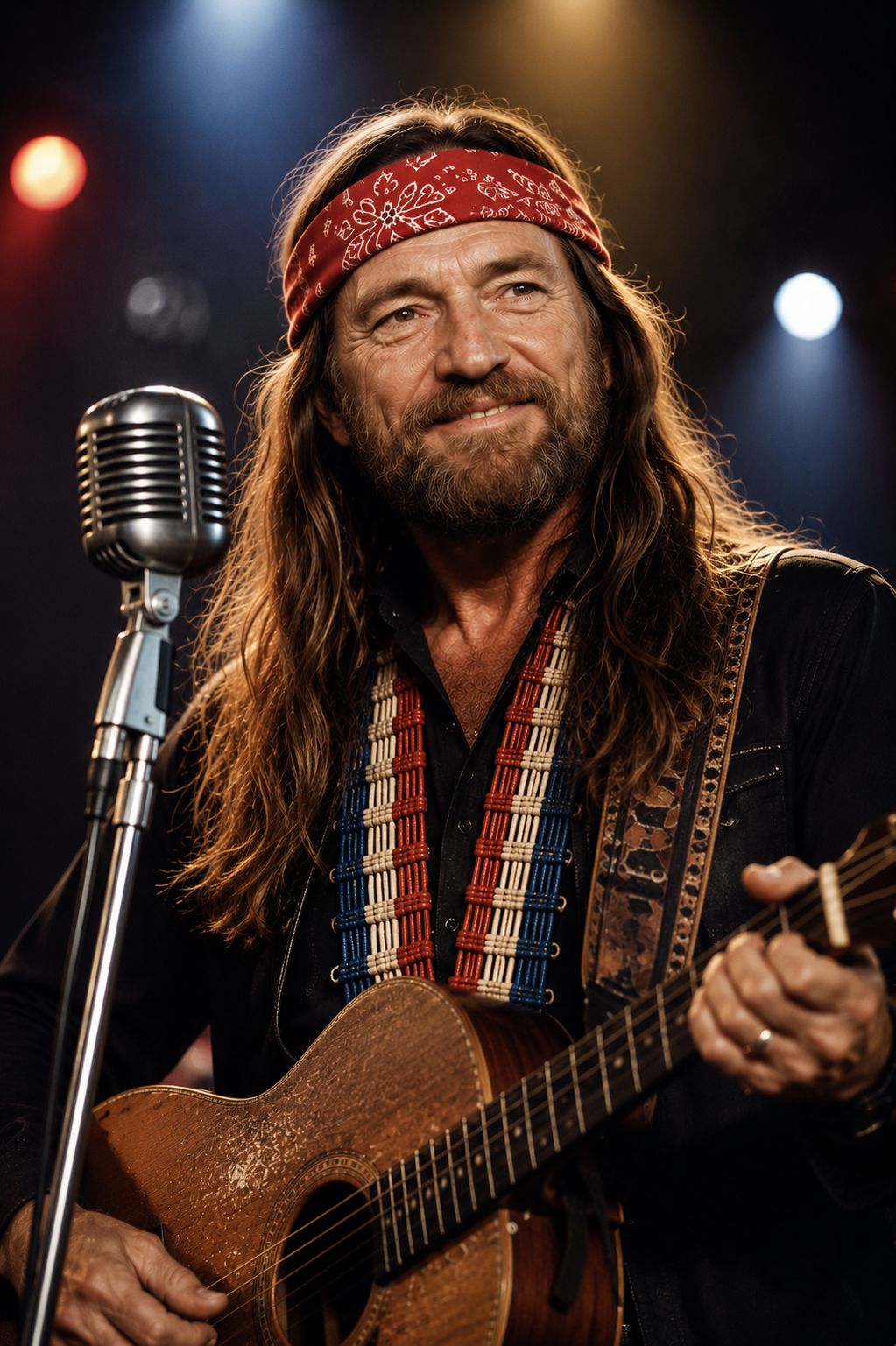
He arrived quietly — with long braided hair, a battered guitar named Trigger, and a stubborn belief that country music should sound honest again.
And somehow, that changed everything.
Before the Legend, There Was a Broken Dreamer
Long before the outlaw image became iconic, Willie Nelson was struggling to survive inside the Nashville machine.
In the 1960s, Nashville wanted clean-cut stars. Willie looked nothing like them. His voice was unconventional — soft, conversational, almost fragile at times. Producers didn’t know what to do with him. Record labels tried forcing him into slick arrangements that buried the soul of his songwriting.
The cruel irony?
He was already writing hits for everyone else.
Songs like Crazy made Patsy Cline a legend. His songwriting brilliance was undeniable. Yet Nashville still treated Willie like he didn’t belong.
That rejection cut deep.
“They wanted me to sound like everybody else. I couldn’t do it.”
The industry saw a misfit.
America was about to see a revolutionary.
The Fire That Burned Nashville’s Rules
Everything changed when Willie left Tennessee and returned to Texas in the early 1970s.
That move wasn’t just geographic.
It was spiritual.
Texas crowds didn’t care about polished formulas. They cared about truth. Willie began playing in rough clubs filled with hippies, bikers, cowboys, and college kids all packed together — something almost unheard of at the time.
Country music had suddenly collided with counterculture.
And audiences loved it.
Willie stopped trying to fit Nashville’s expectations. He grew his hair long. Wore bandanas and denim. Smoked openly. Sang songs at his own pace. The polished country star image disappeared.
In its place emerged something raw, rebellious, and deeply human.
The “Outlaw Country” movement was born.
Alongside artists like Waylon Jennings, Kris Kristofferson, and Johnny Cash, Willie helped create a sound that rejected corporate control.
This wasn’t rebellion for attention.
It was rebellion for artistic survival.
Red Headed Stranger Changed the Game
Then came the album Nashville executives almost destroyed.
In 1975, Willie recorded Red Headed Stranger — a stripped-down concept album filled with silence, sparse instrumentation, and haunting storytelling.
The label panicked.
Executives thought the recordings sounded unfinished. Some reportedly believed the demos had been accidentally submitted instead of the final product.
But Willie refused to change it.
That decision altered country music history forever.
The album became a massive success. Songs like Blue Eyes Crying in the Rain transformed Willie into a superstar. More importantly, the album proved artists could succeed without surrendering creative control.
That terrified the old Nashville system.
Because once audiences heard authenticity, polished formulas suddenly felt empty.
“The magic was in the simplicity.”
Red Headed Stranger didn’t just sell records.
It gave artists permission to be themselves.
The Outlaw Look Became a Cultural Earthquake
It’s impossible to separate Willie’s music from his image during the outlaw era.
The braids.
The beard.
The faded jeans.
The weathered guitar.
He looked less like a country star and more like a wandering philosopher who accidentally became famous.
And people connected with that authenticity immediately.
At a time when America was exhausted from political scandals, war, and social division, Willie felt real. He didn’t pretend to be perfect. He didn’t hide his flaws. He didn’t sanitize his personality for television executives.
Fans trusted him because he seemed incapable of being fake.
That image became bigger than country music itself.
Suddenly, outlaw country wasn’t just a sound.
It was freedom.
The Night Country Music Changed Forever
One of the defining moments of the outlaw movement came with the release of Wanted! The Outlaws in 1976.
The album featured Willie Nelson, Waylon Jennings, Jessi Colter, and Tompall Glaser.
Its cover resembled a Wild West wanted poster.
The message was obvious:
These artists were dangerous to the establishment.
Ironically, the album became country music’s first platinum-certified record.
The rebels had officially taken over.
Nashville could no longer ignore what audiences truly wanted.
Not perfection.
Not formulas.
Not corporate packaging.
They wanted emotion.
They wanted truth.
They wanted artists who sounded alive.
Willie Nelson Wasn’t Just Singing Songs — He Was Healing People
Part of what made Willie’s outlaw era so powerful was emotional vulnerability.
Beneath the rebellious image was a deeply reflective man singing about loneliness, regret, aging, heartbreak, and survival.
His voice carried pain in a way polished singers often couldn’t replicate.
When Willie sang, it felt less like performance and more like confession.
That emotional honesty became the soul of outlaw country.
Listeners didn’t just admire Willie.
They saw themselves in him.
The broken dreamers.
The outsiders.
The people tired of pretending.
“There’s freedom in being exactly who you are.”
That may be the real reason his outlaw era became legendary.
Not because he broke rules.
Because he gave other people permission to break theirs too.
The Influence Still Echoes Through Country Music Today
Modern country music would look completely different without Willie Nelson’s outlaw years.
Artists who value independence, songwriting authenticity, and creative control all owe part of their freedom to that movement.
From Chris Stapleton to Sturgill Simpson, traces of Willie’s influence remain everywhere.
Even outside country music, outlaw culture reshaped how artists viewed the industry itself.
Willie proved an artist could reject expectations and still become beloved by millions.
That idea changed entertainment forever.
And perhaps the most remarkable part?
Willie never seemed interested in becoming a revolutionary icon.
He simply wanted the freedom to sing his songs his own way.
The revolution happened naturally after that.
The Guitar Named Trigger Still Tells the Story
Today, Willie Nelson’s guitar Trigger remains one of the most recognizable instruments in music history.
Scarred, worn down, nearly destroyed by decades of performances — it mirrors Willie himself.
Imperfect.
Weathered.
Still standing.
That image captures the outlaw era better than any statistic ever could.
Because outlaw country was never about looking dangerous.
It was about surviving long enough to remain authentic in an industry constantly trying to reshape you.
And nobody embodied that fight more completely than Willie Nelson.
The Legacy of the Outlaw Era Lives Forever
Decades later, the outlaw era feels larger than music.
It became a cultural reminder that authenticity has power.
Willie Nelson didn’t just change country music’s sound.
He changed its spirit.
He proved vulnerability could be stronger than polish.
Freedom could outsell conformity.
And honesty could outlast trends.
The outlaw era wasn’t merely rebellion.
It was rescue.
It rescued country music from becoming emotionally sterile.
And somewhere inside those smoky Texas dance halls, those stripped-down recordings, and those weary songs about heartbreak and freedom… Willie Nelson gave country music its soul back.
Even now, when people hear that unmistakable voice drifting through the speakers, it still feels like freedom riding down an open highway.
And maybe that’s why the outlaw era never truly ended.
Video