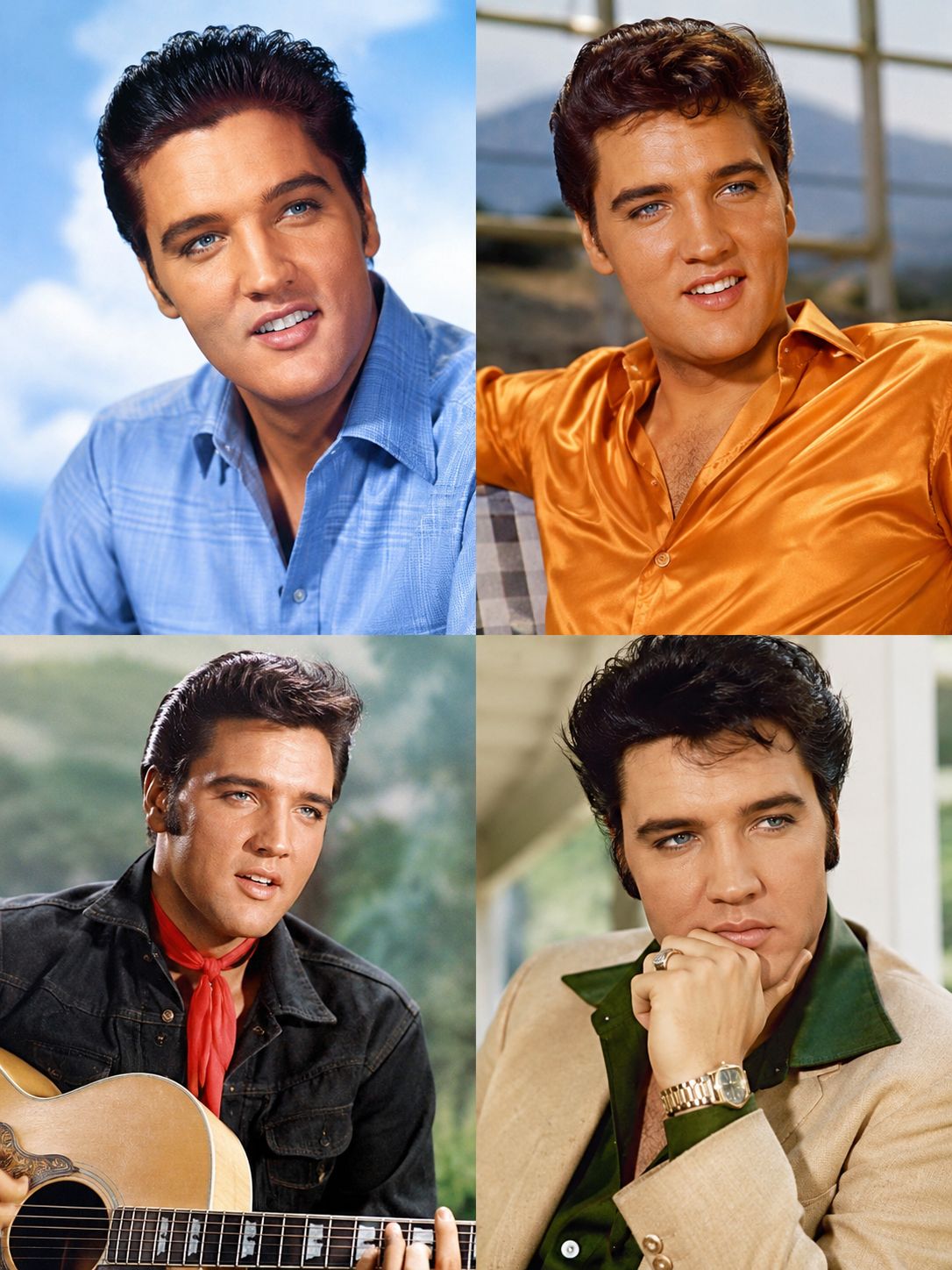
Introduction
There are legends… and then there is Elvis.
More than four decades after his death, people still stand outside the gates of Graceland with tears in their eyes. Grown men choke up hearing the opening lines of “Can’t Help Falling in Love.” Women who once screamed for him as teenagers still place flowers beside his photographs. Young fans — born decades after he died — somehow feel like they lost someone personal.
That kind of emotion doesn’t happen because of fame alone.
It happens because Elvis Presley never felt untouchable.
He was larger than life on stage, but heartbreakingly human underneath the rhinestones.
And that is why fans still cry over him today.
He Didn’t Just Sing Songs — He Sang Pain
Most artists perform music.
Elvis felt it.
When he sang about loneliness, people believed him because loneliness lived inside him. When he sang about love slipping away, it sounded less like entertainment and more like confession. There was trembling emotion in his voice that no amount of technical perfection could manufacture.
Listen carefully to his later performances.
The crowd screams. The lights flash. The white jumpsuit glitters.
But behind those eyes, there is exhaustion. Vulnerability. Sadness.
And audiences could feel it.
“He sounded like a man trying to hold his heart together while singing.”
That emotional honesty created a connection few artists have ever matched. Fans didn’t just admire Elvis — they worried about him. They rooted for him. They loved him the way people love someone they believe needs saving.
Even today, when old concert footage appears online, comment sections fill with emotion:
“I wasn’t even born yet, and he still makes me cry.”
That is not nostalgia.
That is emotional truth surviving generations.
The World Watched Him Rise… and Fall
Part of Elvis Presley’s tragedy is that fans witnessed both the dream and the destruction.
He came from almost nothing.
A poor boy from Mississippi. Humble beginnings. A tiny house. A deeply religious mother. No privilege. No roadmap to greatness.
Then suddenly, the world exploded around him.
The voice.
The hair.
The hips.
The scandal.
The hysteria.
Overnight, Elvis became more than a singer. He became a cultural earthquake. Parents feared him. Teenagers worshipped him. America could not stop watching him.
But fame came with a terrible price.
The same world that crowned him also consumed him.
Hollywood overworked him. Managers controlled him. The pressure never stopped. Behind closed doors, the man who looked invincible was struggling with exhaustion, isolation, and dependence on prescription medication.
Fans saw the change slowly happen.
The bright-eyed rebel of the 1950s became a tired icon trapped inside his own fame by the 1970s.
And that transformation broke hearts.
Because people could see he was suffering.
“The saddest thing about Elvis is that he gave everyone joy while quietly losing his own.”
That sentence still haunts many fans today.
His Voice Carries Something Modern Music Often Lost
There is a reason people still stop when an Elvis song plays.
His voice was not sterile.
It cracked.
It trembled.
It breathed.
Modern music often feels polished to perfection. Elvis sounded alive. Imperfect in the most beautiful way possible.
When he sang gospel music, it felt spiritual. When he sang heartbreak songs, it felt intimate. Even his biggest performances carried emotional risk, as if he might fall apart inside the song itself.
That vulnerability created timelessness.
A teenager in 1956 felt it.
A grandmother in 1986 felt it.
A young listener on TikTok in 2026 still feels it.
Because real emotion never expires.
Fans Mourn the Man He Could Have Been
One of the deepest reasons people still cry over Elvis Presley is simple:
They mourn potential.
Fans don’t only grieve the man who died at 42.
They grieve the older Elvis they never got to see.
What would he have become if he had escaped the machine surrounding him? What music would he have made in his 50s? Would he have found peace? Would he have finally rested? Would he have returned to gospel music full-time? Would he have become a mentor to younger artists?
Those unanswered questions leave an ache that never fully disappears.
Unlike many stars whose stories feel complete, Elvis’s story feels interrupted.
Abruptly.
Painfully.
Forever unfinished.
“People don’t cry because Elvis was perfect. They cry because he was fragile.”
And fragility is unforgettable.
Graceland Feels Less Like a Museum… and More Like a Goodbye
Every year, thousands travel to Graceland.
Not like tourists.
Like pilgrims.
Some carry vinyl records worn by time. Some bring photographs from concerts they attended as teenagers. Some simply stand silently near his grave, overwhelmed by emotion they cannot explain.
The strange thing is that many visitors never met Elvis.
Yet they grieve him deeply.
Why?
Because his music became attached to people’s lives.
Their first love.
Their first dance.
Their mother’s favorite song.
Their father singing in the car.
Their childhood memories.
When Elvis died, many people felt as though a piece of their own life disappeared with him.
And every return to Graceland becomes an emotional reunion with memory itself.
He Represented a More Innocent Kind of Stardom
Modern celebrity often feels distant, calculated, and corporate.
Elvis felt personal.
Despite his superstardom, he never entirely lost the awkward Southern boy underneath it all. Interviews revealed shyness. Kindness. Humor. Insecurity.
Stories about Elvis giving away cars, helping strangers, and taking care of friends continue to circulate decades later because fans sensed genuine generosity in him.
Was he flawed? Absolutely.
But his flaws made him human.
People forgive humanity more easily than perfection.
Especially when they believe fame destroyed part of that humanity.
The Loneliness Around Elvis Still Hurts People
Perhaps the most heartbreaking part of the Elvis story is not how famous he became.
It is how lonely he seemed at the end.
Surrounded by people.
Yet emotionally isolated.
Many fans revisit his final performances and notice something haunting: beneath the applause, he looked tired in a way that had nothing to do with sleep.
There is pain in watching someone carry the expectations of millions while quietly collapsing inside.
And because audiences loved him so deeply, many still carry guilt they cannot explain.
Could someone have helped him sooner?
Could things have ended differently?
Those questions still echo through documentaries, interviews, and fan conversations today.
His Death Froze Him in Time
Some artists fade gradually.
Elvis did not.
His death shocked the world so suddenly that he became emotionally frozen in public memory forever.
Forever young enough to dream bigger.
Forever tragic enough to mourn.
That combination created immortality.
Even younger generations who discover him through old clips often react with surprise:
“He feels real.”
And that may be the greatest compliment any artist can receive decades after death.
Because Elvis Presley was real.
Not perfect.
Not invincible.
Not untouchable.
Real.
Why The Tears Never Truly Stop
Fans still cry over Elvis Presley because his story touches something universal:
The fear of being loved by the world but still hurting inside.
The loneliness hidden behind success.
The beauty of talent mixed with vulnerability.
The tragedy of a man who gave people comfort while quietly losing himself.
And perhaps most importantly, people cry because Elvis reminds us that even icons are human beings.
When fans hear his voice today, they are not just hearing music.
They are hearing hope.
Pain.
Longing.
Memory.
Loss.
And somewhere within every trembling note, they hear a man who wanted to be loved far more than he wanted to be worshipped.
That is why the tears remain.
And that is why Elvis Presley will never truly disappear from the hearts of millions.