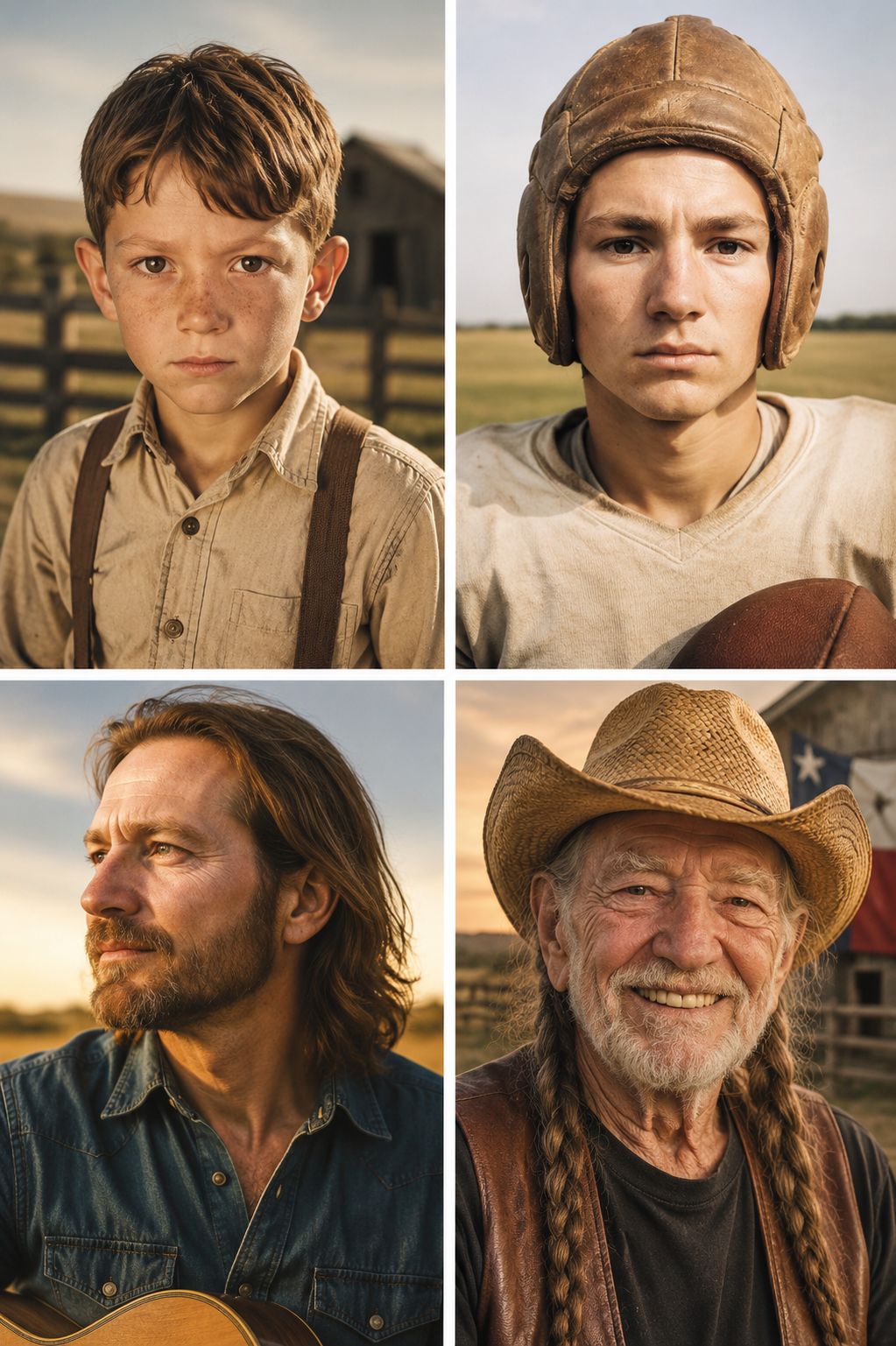
Introduction
Few artists in American music history have carried the soul of their hometown as faithfully as Willie Nelson. Long before the sold-out arenas, the outlaw-country movement, and the legendary braids became cultural symbols, Willie was simply a small-town Texas boy trying to survive heartbreak, poverty, and loneliness with a guitar in his hands.
And no matter how far fame took him, Texas never stopped living inside him.
That is the reason millions of fans still feel emotionally connected to Willie Nelson today. He never acted bigger than where he came from. He never erased the dust roads, the honky-tonks, or the hard-working people who shaped him. Instead, he carried them into every lyric, every performance, and every chapter of his life.
A Childhood Built on Struggle
Willie Nelson was born during the Great Depression in Abbott, Texas — a tiny farming town where life was often harsh and opportunities were scarce. His parents separated when he was young, leaving Willie and his sister Bobbie to be raised by their grandparents.
Those early years shaped him forever.
There was no glamorous beginning. No easy road. Just church hymns, cotton fields, radio music, and long Texas nights that taught a young boy how loneliness sounds.
“Texas wasn’t just where Willie lived. It became the language of his heart.”
The pain of abandonment stayed with him for decades. But instead of letting bitterness consume him, Willie poured those emotions into songwriting. That raw honesty later became the foundation of his music career.
Fans didn’t just hear Willie Nelson songs.
They heard truth.
Texas Was Never a Marketing Image
Many artists eventually turn their roots into branding. Willie Nelson never had to.
Texas was already woven into his identity.
Even after becoming one of the most recognizable stars in country music, Willie still spoke like the people back home. He dressed comfortably. He told stories like a man sitting on a porch after sunset. There was never a polished Hollywood mask covering the real person underneath.
That authenticity made people trust him.
In an industry often driven by image, Willie felt human.
He represented farmers, truck drivers, bartenders, waitresses, struggling dreamers, and ordinary Americans who rarely saw themselves reflected honestly in entertainment.
And perhaps most importantly, Willie never forgot the emotional values Texas taught him:
- Loyalty
- Simplicity
- Independence
- Resilience
- Compassion
Those values became the heartbeat of his career.
The Road Changed Him — But Never Replaced Him
By the 1970s, Willie Nelson had become one of the defining voices of outlaw country music. Alongside legends like Waylon Jennings, Willie challenged Nashville’s rigid system and fought for artistic freedom.
But even as his fame exploded nationwide, Texas remained his emotional home.
He returned constantly.
Not because he had to.
Because he needed to.
The landscapes reminded him who he truly was beneath the spotlight.
The small-town diners, local dance halls, and open highways grounded him during moments when celebrity life became overwhelming. While many stars chased luxury and status, Willie kept chasing peace.
And he often found it back in Texas.
“You can take Willie Nelson out of Texas, but you could never take Texas out of Willie Nelson.”
That connection became even stronger as he aged.
The older Willie became, the more openly nostalgic he grew about home.
Luckenbach Became More Than a Song
One of the clearest examples of Willie’s deep Texas connection came through the legendary song “Luckenbach, Texas.”
Although the song was famously recorded by Waylon Jennings, Willie’s spirit was deeply tied to the movement surrounding it. The song represented something larger than music.
It represented escape.
A return to simplicity.
A rejection of fame-driven emptiness.
For many country fans, Texas symbolized authenticity — and Willie Nelson became the living face of that authenticity.
Even today, younger generations who never experienced classic outlaw country still associate Willie with freedom, honesty, and southern soul.
That emotional image has lasted for decades because it was real.
Farm Aid Revealed His True Heart
Willie Nelson’s love for Texas wasn’t only emotional.
It became action.
In 1985, Willie co-founded Farm Aid to support struggling family farmers across America. While the organization expanded nationally, its spirit reflected the rural communities Willie understood deeply from his Texas upbringing.
He knew what financial hardship looked like.
He knew what it felt like when hardworking people were forgotten.
And instead of distancing himself from those struggles after becoming famous, Willie stayed connected to them.
That choice changed how many fans viewed him.
He wasn’t just a celebrity.
He became a symbol of empathy.
“Willie never forgot the people who reminded him of home.”
That emotional loyalty may be the biggest reason his legacy continues growing even in his 90s.
Fans See Their Own Families in Willie
Part of Willie Nelson’s lasting power comes from how familiar he feels.
For many Americans, he reminds them of a grandfather, an uncle, or an old friend who lived through difficult times but still carried kindness and wisdom.
His Texas roots made him relatable because they never felt manufactured.
Even his imperfections became part of his appeal.
Financial troubles. IRS battles. Heartbreak. Aging. Loss.
Willie never pretended to be invincible.
And audiences connected with that honesty on a deeply personal level.
Country music has always thrived when artists tell the truth about life. Willie Nelson mastered that art because his roots kept him emotionally grounded.
He understood pain because he lived it.
He understood hope because Texas taught people how to survive hard seasons.
The Texas Spirit Lives in Every Song
Listen carefully to Willie Nelson’s greatest songs and one thing becomes obvious:
Texas is everywhere.
It’s in the loneliness of the melodies.
It’s in the wandering spirit of the lyrics.
It’s in the dusty emotional atmosphere surrounding his voice.
Songs like “Blue Eyes Crying in the Rain,” “On the Road Again,” and “Always on My Mind” feel timeless because they carry emotional landscapes larger than music itself.
They feel lived-in.
Real.
Weathered.
And that emotional texture came directly from Willie’s upbringing.
No expensive production could fake that feeling.
No industry machine could manufacture that soul.
Why Younger Generations Still Admire Him
In today’s fast-moving entertainment world, authenticity has become increasingly rare. That’s one reason younger audiences continue discovering Willie Nelson.
He represents something people miss.
A slower, more honest America.
An artist who never seemed obsessed with fame.
A man who stayed loyal to his origins despite enormous success.
Social media clips of Willie often go viral not simply because he’s legendary — but because audiences sense sincerity when they watch him speak.
There’s wisdom in his calmness.
There’s history in his voice.
And there’s Texas in everything he does.
The Legacy Goes Beyond Country Music
Willie Nelson’s story is ultimately bigger than genre.
Yes, he helped redefine country music forever.
But his deeper legacy may be reminding people that success means very little if you lose connection to who you truly are.
And Willie never lost that connection.
Not through fame.
Not through hardship.
Not through aging.
Texas remained the emotional compass guiding his life.
“Home wasn’t a place Willie Nelson escaped from. It was the place he carried with him forever.”
That truth still touches millions today.
Because deep down, people admire anyone who remembers where they came from.
And few artists in history have honored their roots more beautifully than Willie Nelson.